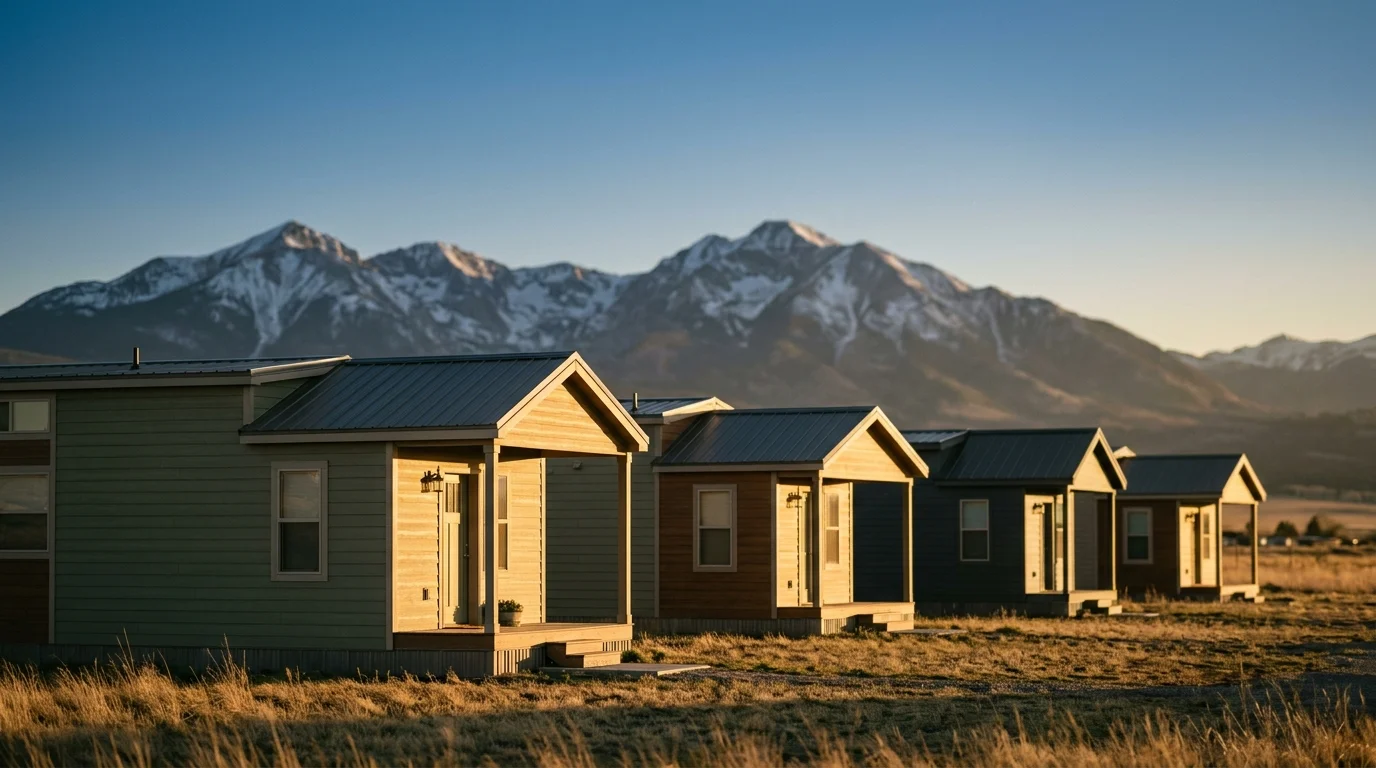
Somewhere in the Mountain West, a small community is betting on factory-built tiny homes to solve a housing crisis that traditional construction has proven too slow and too expensive to address. A project called the Wild Horse Tiny Home Village is moving forward, with local officials seeking a modular housing contractor through the Rocky Mountain Bid System.
The exact location is not confirmed in the public record. The solicitation appears on a Colorado portal, pointing to a possible connection to Wild Horse, Colorado, a tiny Cheyenne County community on the eastern plains. But the project's name also fits Wyoming's wild horse country near Rock Springs or the Red Desert, where the Bureau of Land Management manages some of the country's largest mustang herds. The agency issuing the RFP is not identified in the solicitation.
What is clear is why a project like this would be pursued anywhere in the region. Home prices across Wyoming and rural Colorado jumped 40 to 50 percent between 2019 and 2023 as remote workers and pandemic-era migrants pushed into communities that were historically affordable. In remote areas, stick-built construction often costs $400,000 or more for a modest home, a price driven up by labor shortages, short mountain building seasons and long supply chains for materials.
Modular construction sidesteps many of those barriers. Factory-built units are assembled in controlled environments and shipped to the site, cutting both time and cost. The approach has gained momentum as a policy tool: the Biden administration's 2022 Housing Supply Action Plan explicitly encouraged factory-built solutions, and HUD loosened rules around manufactured and modular housing in 2024. States like Colorado, which passed Proposition 123 in 2022 to fund affordable housing, have also pushed communities to move faster and think creatively.
Tiny home villages in particular have drawn both enthusiasm and skepticism. Supporters point to their speed and cost advantages. Critics question their long-term durability and whether residents will be low-income workers or, eventually, short-term rental guests.
Those questions will likely shape how this project is received once the issuing agency is identified and more details become public. For now, the next step is contractor selection, after which design and construction timelines should come into clearer focus.