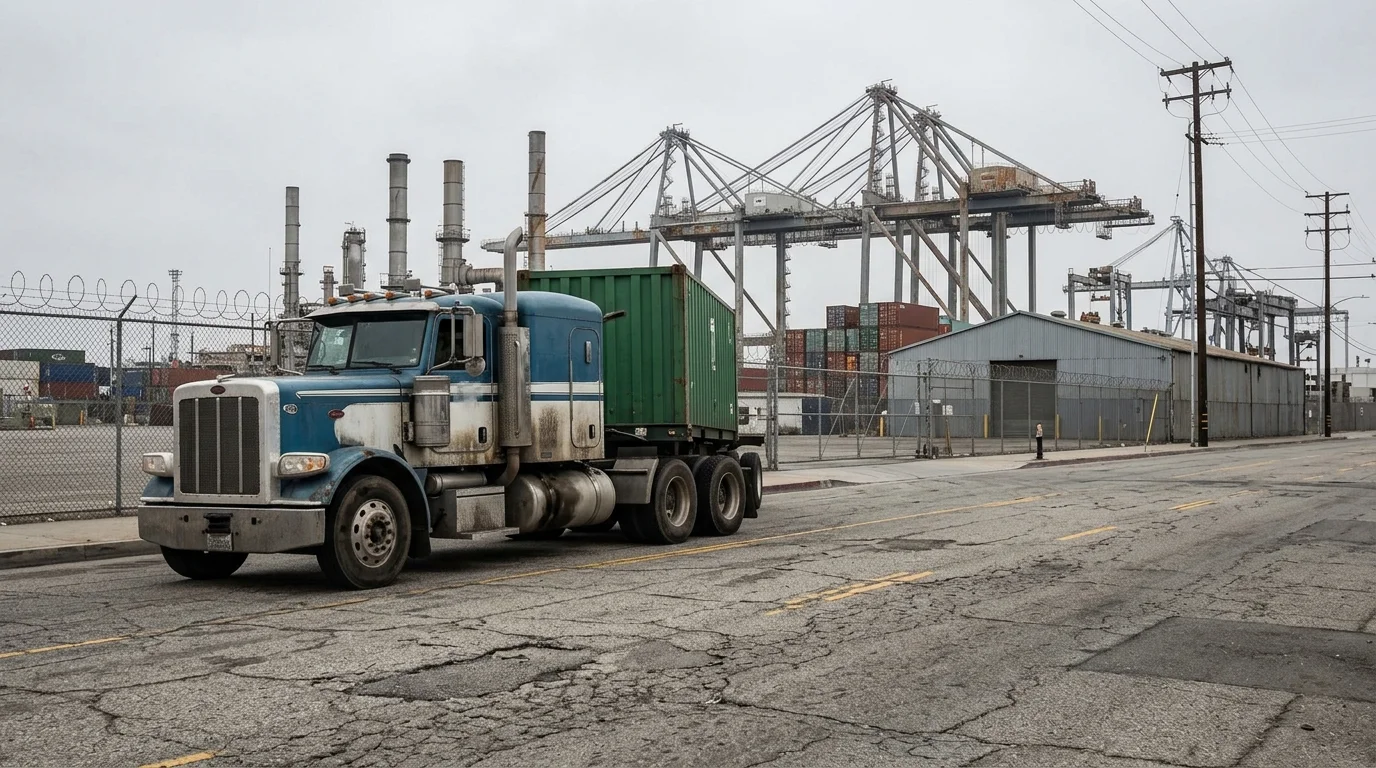
The Port of Los Angeles is moving to build an electric charging depot for heavy-duty cargo trucks in Wilmington, a majority-Latino neighborhood that has endured some of the worst diesel pollution in California for generations.
The port is looking for a private company to lease, develop, and operate nearly two acres of industrial land at East "I" Street and Alameda Street, just blocks from terminal access routes that see roughly 20,000 drayage truck trips every day. The site would serve as a charging station specifically for the Class 8 electric trucks that haul shipping containers in and out of the port complex. Proposals are listed on the port's contracting opportunities page.
The project addresses an infrastructure bottleneck threatening California's clean-truck ambitions. The state's Advanced Clean Fleets rule requires all new drayage trucks registered in California to be zero-emission starting in 2024, and the entire fleet of roughly 33,000 trucks serving California ports must be zero-emission by 2035. But heavy-duty electric trucks require megawatt-class chargers, and depots of that scale demand utility upgrades that can take years to permit and build. The Port of LA received a $412 million EPA Clean Ports Program grant in October 2024, one of the largest in the country, to fund zero-emission cargo handling equipment and charging infrastructure across the broader transition.
For Wilmington residents, the stakes are personal. The community ranks in the top 5 percent of California's most pollution-burdened census tracts, surrounded by the largest port complex in the Western Hemisphere, oil refineries, and a constant flow of diesel trucks. Childhood asthma rates in Wilmington have historically run 30 to 50 percent higher than county averages, a disparity that sparked lawsuits and community organizing as far back as 2006. Groups like Communities for a Better Environment and East Yard Communities for Environmental Justice have spent two decades pressuring the port to act.
The industry has not made the transition easy. The Harbor Trucking Association and the California Trucking Association have sued the California Air Resources Board over the clean truck rules, arguing the technology and charging network aren't ready. There is also political uncertainty: the Trump administration has signaled it may move to revoke California's authority to set its own clean vehicle standards, which could undermine the regulatory foundation driving the port's investments. Private operators including Forum Mobility, WattEV, and Zeem Solutions have already opened competing heavy-duty charging depots elsewhere in the LA Basin, signaling that a commercial market is forming even as the legal fight continues.
The port will select an operator to build and run the Wilmington site under a lease agreement. How quickly the depot gets built and whether it can attract enough trucks to prove the model will offer an early measure of whether the 2035 deadline is achievable.