A four-mile stretch of US Route 277 near Cement, Oklahoma has the kind of design that highway engineers have been trying to fix for decades: curves that follow old property lines rather than safe sight distances, narrow shoulders, and a creek crossing prone to drainage problems. Oklahoma is now moving to replace it entirely.
The state received a $15.9 million federal grant this month to build a new alignment for the road, running from the eastern edge of Cement roughly four miles east to Middle Bills Creek. Rather than patch the existing road, the project will construct a fresh roadway on a new path, including a new bridge over Middle Bills Creek.
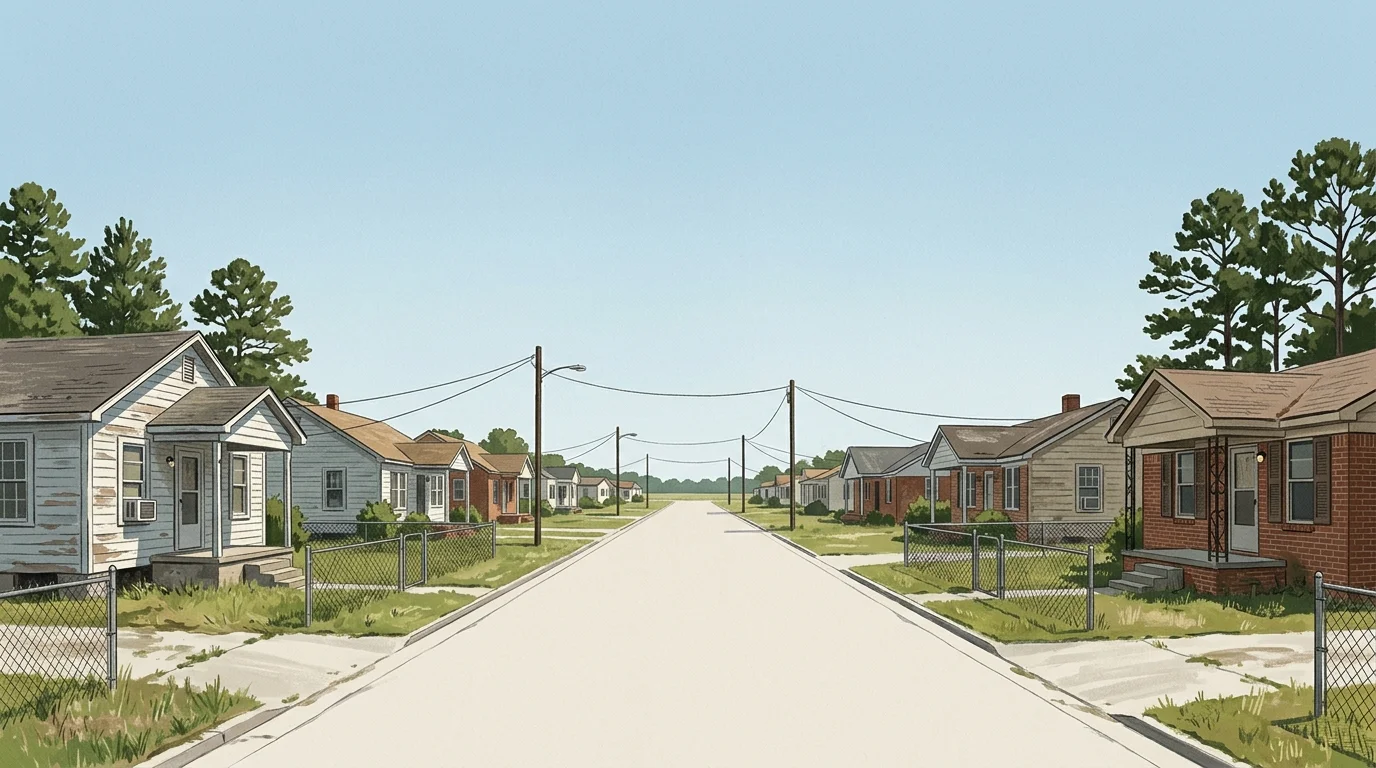
Cement is a small agricultural community of about 500 people in Caddo County, in southwestern Oklahoma. US-277 is one of the main north-south corridors through that part of the state, carrying grain trucks, oilfield equipment, cattle haulers, and increasingly oversized loads for wind turbine components. Heavy freight traffic on an already substandard road is a combination that shortens pavement life and raises crash risk.
Oklahoma already has one of the worst traffic fatality rates in the country, roughly 1.5 deaths per 100 million vehicle miles traveled compared to a national average of about 1.3. Rural two-lane highways like this stretch of 277 are a big part of that problem: they account for more than half of all U.S. traffic deaths despite carrying far less than half of total traffic. Road departure crashes, where a driver leaves the lane and hits something, are a leading crash type on Oklahoma's rural roads and are far more likely on highways with sharp curves and limited shoulders.
The funding comes through the Surface Transportation Block Grant program, federal highway dollars that can be applied to a wide range of road and bridge projects. Oklahoma is projected to receive roughly $5.3 billion in federal highway formula funding over five years under the Bipartisan Infrastructure Law, and the state has been moving to accelerate construction projects as a result. ODOT has been working through years of planning and environmental review on this realignment before reaching the construction funding stage this spring. A similar federal investment is rebuilding aging infrastructure elsewhere in the state, including $8.5 million for US-69 overpasses in Durant.
Construction timing has not been publicly announced, but the April 2026 funding obligation marks the point at which federal dollars are formally committed to the project, typically a precursor to contractor selection and groundbreaking.