A pair of aging overpasses carrying US-69 over railroad tracks and city streets near Durant, Oklahoma are getting rebuilt, backed by an $8.5 million federal grant from the Surface Transportation Block Grant Program.
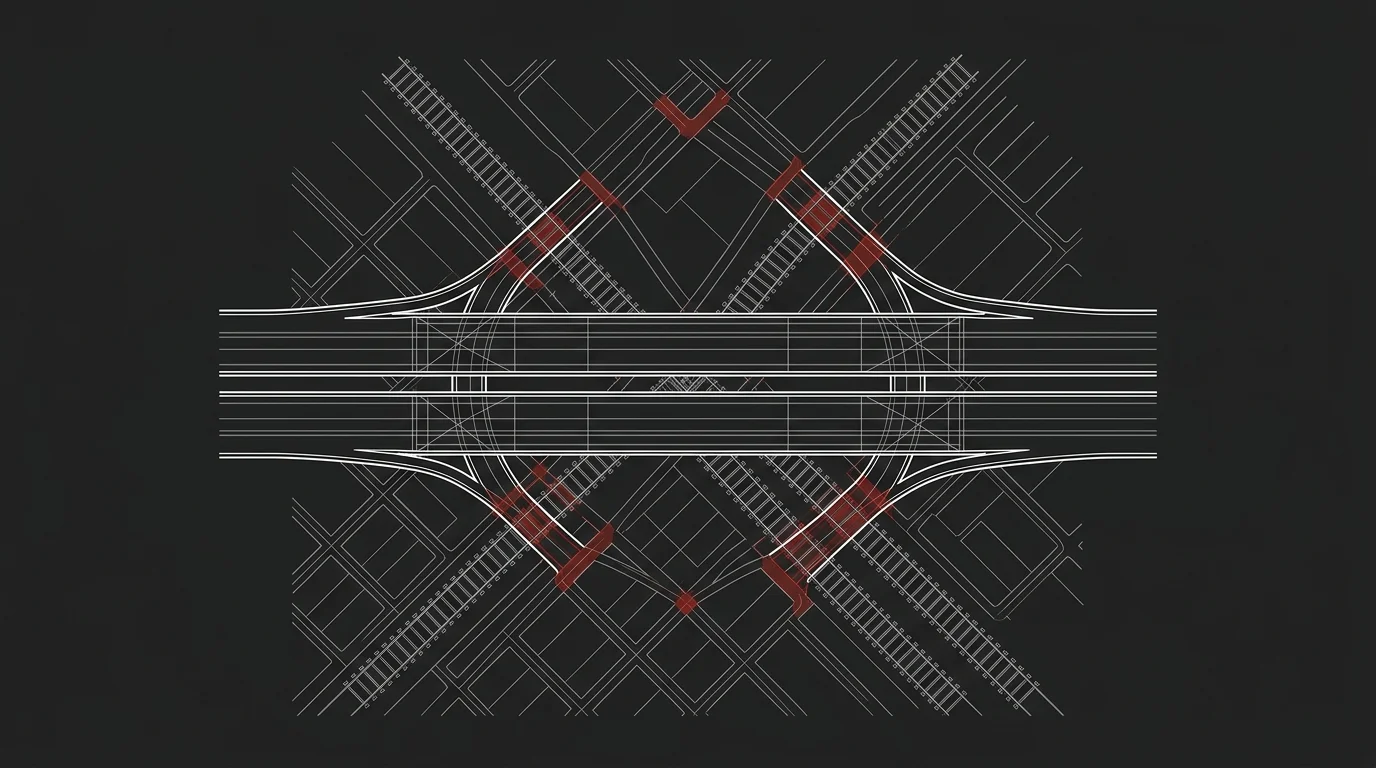
The two structures, one for each direction of travel, span West Arkansas Street, the active Kiamichi Railroad freight line, and Main Street at a complicated intersection of highway, rail, and local traffic roughly four miles north of the US-69 Business junction. Bridges that cross working rail lines require additional engineering coordination with federal railroad regulators, adding cost and complexity compared to typical highway overpasses.
US-69 is a north-south backbone for southeastern Oklahoma, connecting Durant to I-35 and the Dallas-Fort Worth metroplex to the south, and running north through McAlester and Muskogee toward Kansas. Durant, the Bryan County seat and headquarters of the Choctaw Nation of Oklahoma, has grown by roughly 15 percent since 2010, drawn by its low cost of living and position about 90 miles north of Dallas. That growth has pushed more traffic onto infrastructure built for a smaller, quieter city.
Oklahoma has spent two decades chipping away at one of the worst bridge backlogs in the country. The state once led the nation in structurally deficient bridges, with more than 6,300 flagged in the early 2000s. A major state-funded push reduced that number significantly, but the American Society of Civil Engineers still gave Oklahoma bridges a C- as recently as 2021, and thousands of structures remain functionally obsolete or overdue for work. Federal dollars from the 2021 Bipartisan Infrastructure Law, which included $27.5 billion specifically for bridge repair nationwide, have helped accelerate that effort. Similar IIJA-backed projects have addressed corridors under growth pressure across the region, including a $46 million widening project in Denton County, Texas.
The federal grant covers the largest share of the project cost, though Surface Transportation Block Grant funding typically requires a 20 percent state or local match, meaning the total investment is likely above $10 million. Oklahoma DOT will administer the project. A construction timeline has not been publicly announced.