New Jersey school districts issued 5 school safety RFPs in the last 30 days, more than twice the 12-month monthly average of roughly 2, and the timing is not a coincidence. Three distinct funding programs, each with its own purpose, its own deadlines, and its own procurement requirements, are colliding in the same back-to-school window, forcing districts to move fast in a vendor market that every neighboring state is also working.
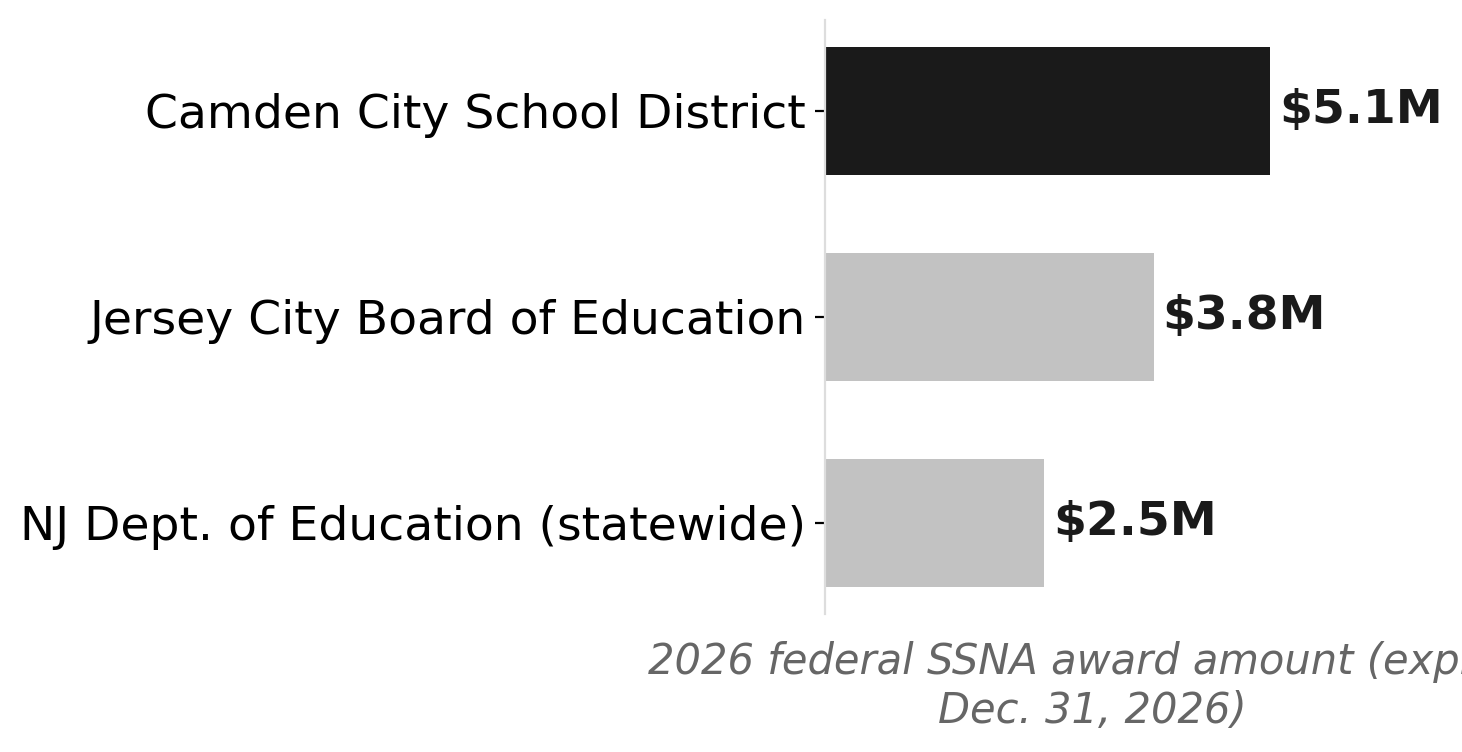
The most acute pressure is on Camden City and Jersey City. Together, those two districts hold $8.83M in federal School Safety National Activities grants awarded in January 2026 under the Bipartisan Safer Communities Act's Stronger Connections Grant program: Camden received $5.08M and Jersey City received $3.75M. Both awards carry a hard performance end date of December 31, 2026. NJDOE received an additional $2.5M SSNA award on the same timeline. Districts that do not obligate those dollars, through signed contracts with vendors, executed service agreements, or completed construction scopes, risk returning unspent funds to Washington. For two of New Jersey's highest-poverty urban districts, that is not an abstract risk.
The SSNA grants are designed for broad school climate and safety work: emergency operations planning, threat assessment teams, mental health supports, and security infrastructure for high-need schools. They are competitive federal awards administered through NJDOE, and they are separate from the state's own capital security program. That distinction matters for understanding why the RFP spike is spread across different county types and different project scopes.
Source: NationGraph.
The second driver is the Securing Our Children's Future Bond Act (P.L. 2018, c.119), the voter-approved $450M state bond bill that funds physical security upgrades, panic alarms, access control systems, perimeter hardening, for any public school district in New Jersey, not just high-need ones. Alyssa's Law, which mandates silent panic alarm systems in all public K-12 schools, functions as a gateway condition for bond act funding: districts must certify compliance through the New Jersey Schools Development Authority before accessing their Round 3 grant allocations. That certification sequence is generating a secondary wave of hardware and inspection RFPs as districts clear the compliance hurdle in order. A Phase 2 construction inspection contract in Garfield (Bergen County) fits this profile, a suburban district moving through the bond act pipeline rather than chasing a federal deadline.
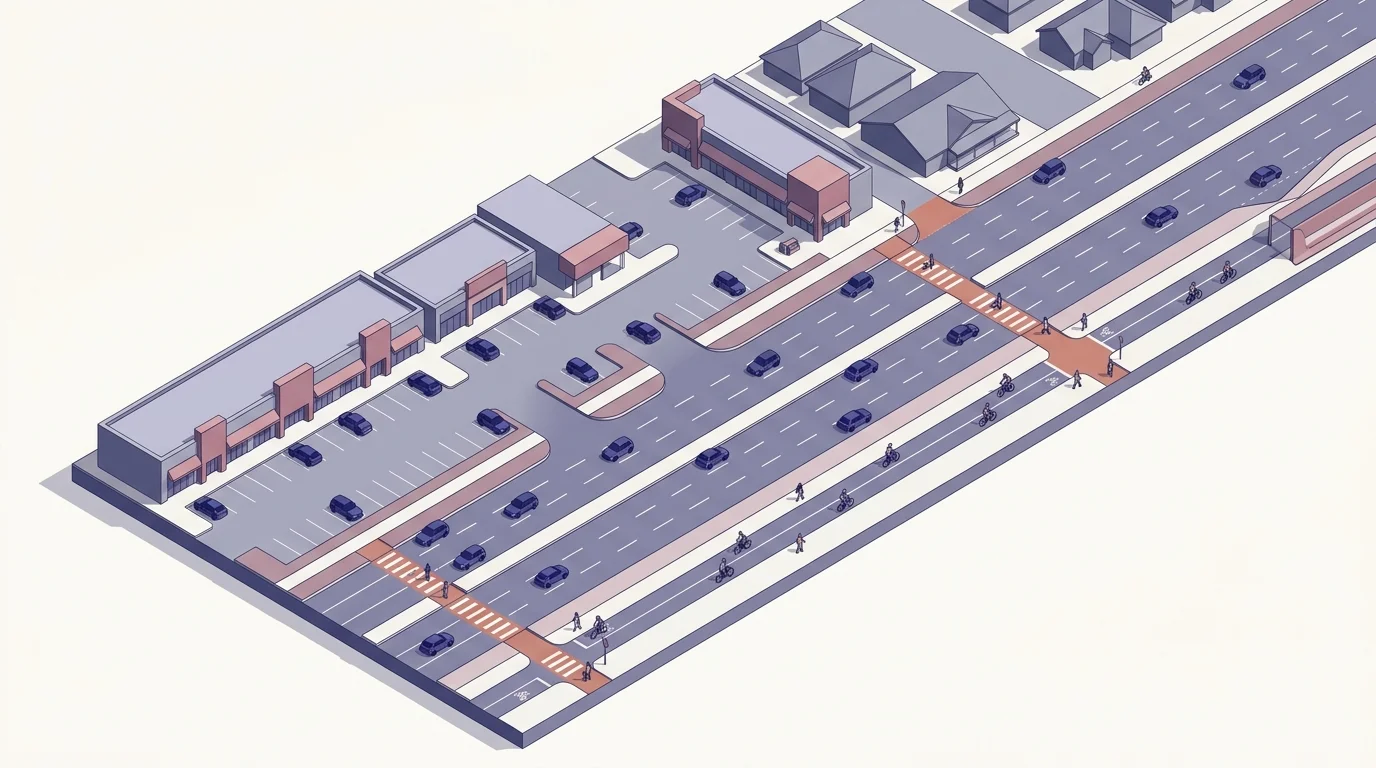
The third driver landed in August 2026, when NJDOT opened its 2027 Safe Routes to School grant solicitation with a November 13, 2026 application deadline. Safe Routes to School is a federal-aid infrastructure program focused entirely on pedestrian and bicycle safety around school campuses, it funds crosswalks, sidewalk gaps, signage, and traffic-calming infrastructure, and it has no connection to interior security hardware or emergency operations. It explains the pedestrian traffic-calming RFPs appearing in Salem County: Pennsville's project is a district trying to get an NJDOT application in before November, which requires a scoped design contract first.
Those three programs, the BSCA federal SSNA grants, the state bond act, and NJDOT's Safe Routes solicitation, are funding different things for different actors, but they are all generating procurement actions at the same time. Add in the DOJ Stop School Violence Program, which holds active awards of $1M to Ocean County and $2M to the New Jersey Department of Health through 2027, and the vendor market is absorbing demand from four overlapping program streams simultaneously.
New Jersey's governance structure amplifies the effect. The state operates more than 600 public school districts, one of the most fragmented systems in the country, meaning a statewide program does not produce a single state contract. It produces dozens of parallel local RFPs, each procured independently by a district business administrator working against the same calendar. When Camden and Jersey City need security consultants, and Garfield needs a construction inspector, and Pennsville needs a traffic engineer, they are all entering a regional market in the same weeks.
Connecticut issued 7 school safety RFPs in the same 30-day window; New York and Pennsylvania each issued 3. The Northeast is broadly active, but New Jersey's combination of an urban-district federal grant squeeze, a statewide bond act moving through compliance sequencing, and a fresh NJDOT solicitation makes the state's procurement spike structurally distinct from its neighbors.
The next signal to watch is December 31. If Camden City and Jersey City have not moved their SSNA dollars into signed contracts by then, the funds expire. Districts that have navigated the bond act's Alyssa's Law certification step are next in line for Round 3 allocations, and their RFPs will follow. The November 13 NJDOT deadline will produce another cluster of pedestrian-safety procurements in the weeks before it closes. The sprint is not over; it is sequenced.