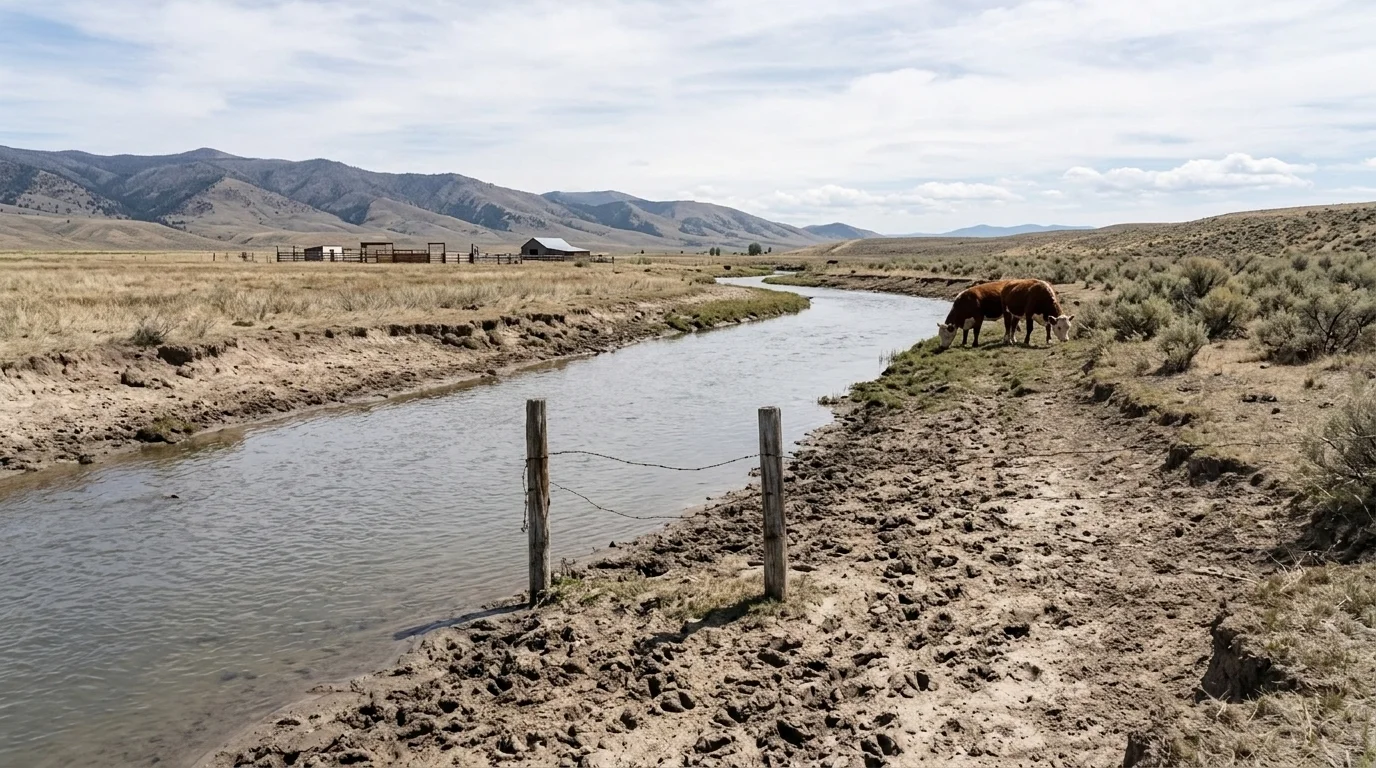
A tributary creek in Montana's Deer Lodge Valley is getting a significant ecological makeover as the state works to bring native trout back to a watershed still bearing the scars of more than a century of copper mining and open-range cattle grazing.
The state is seeking contractors to restore Lower Racetrack Creek, a Clark Fork River tributary in Powell County that historically supported westslope cutthroat trout before decades of unfenced grazing, flood irrigation and channelization degraded its lower reaches. The work includes riparian fencing, a fish screen on the irrigation diversion, streambank rebuilding and realigning portions of the creek channel.
The project is part of Montana's larger effort to restore the Upper Clark Fork basin using roughly $215 million from a 2008 settlement with Atlantic Richfield (now part of BP) over natural resource damages from the Anaconda-Butte mining complex, the largest Superfund site in the United States. Racetrack Creek drains the Flint Creek Range into the Deer Lodge Valley just downstream of that contaminated landscape, and restoration planners have long identified it as critical habitat for native fish trying to recolonize the basin.
What makes this project notable is its design. Rather than simply fencing cattle away from the stream, the plan also provides ranchers with an off-channel stockwater system and a modernized irrigation diversion, so working operations in the valley aren't simply cut off. That cooperative bargain has become standard in Western stream restoration over the past two decades, and conservation groups like Trout Unlimited and the Clark Fork Coalition have backed it as the realistic path to recovering fish in a landscape dominated by working ranches. As previously reported, Racetrack Creek has been a focal point of this restoration strategy for years.
The urgency behind this work has grown. Warming summers and declining late-season flows across the Northern Rockies are squeezing cold-water species like cutthroat and bull trout into smaller refuges, making cold, clean tributaries more critical than ever. Federal funding from the Bipartisan Infrastructure Law and related conservation programs has accelerated tributary restoration projects like this one across Montana in recent years.
The state has not disclosed a project budget or timeline in the solicitation. Once a contractor is selected, the physical work of rebuilding the creek and its surrounding ranch infrastructure will begin.