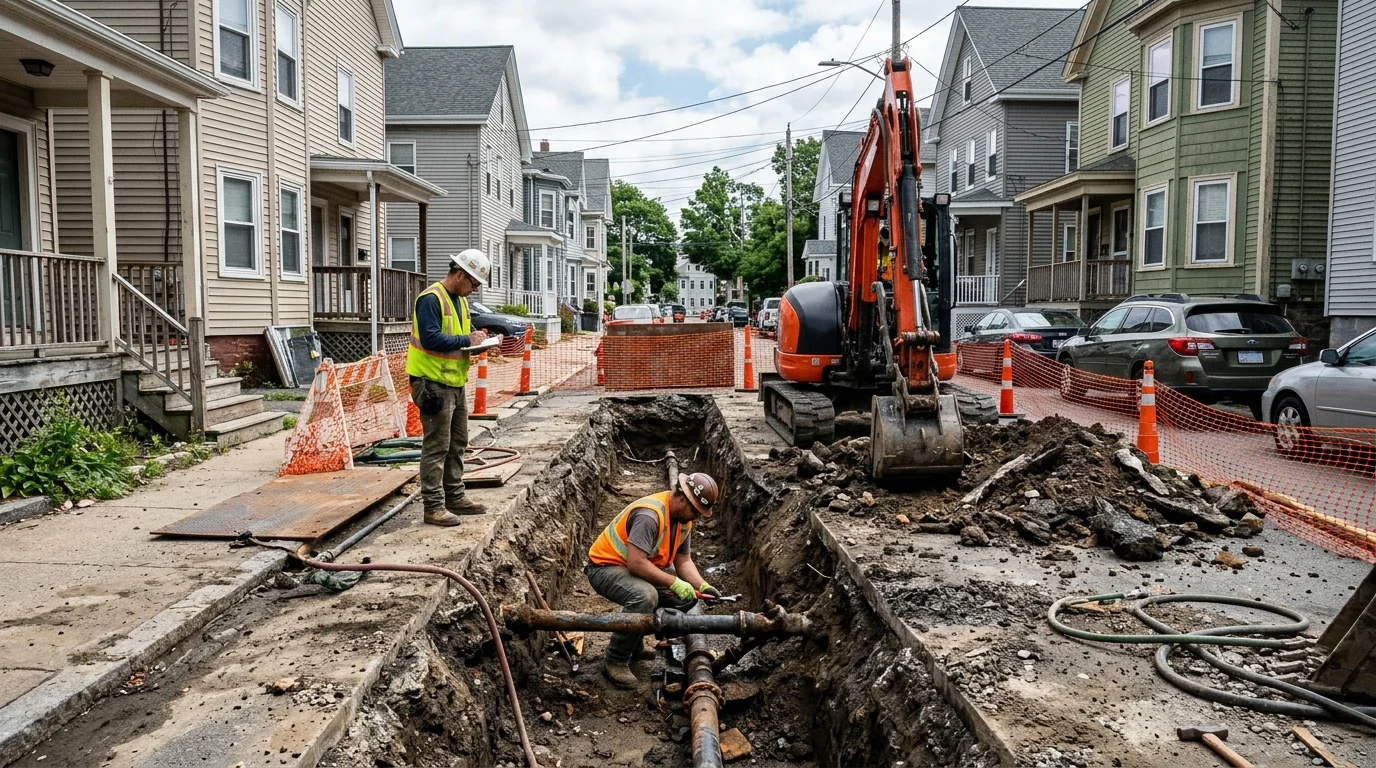
Medford, Mass., is moving to rip out lead water pipes buried beneath its streets, beginning what will likely be years of phased replacement work in a city where much of the housing stock dates to before lead was banned from new plumbing in 1986.
The city posted a solicitation for its first major lead service line replacement contract this month, targeting roughly 100 service lines in what appears to be the first in a series of annual batches. At that pace, the work will continue for years across this dense inner-ring Boston suburb of about 60,000 residents.
The push comes amid federal rules tightened after the Flint, Mich., water crisis exposed how widespread and dangerous aging lead infrastructure remained in older American cities. The EPA's Lead and Copper Rule Improvements, finalized in October 2024, now require virtually every water system in the country to replace all lead service lines within 10 years, with compliance effectively starting in 2027. Medford, like many Northeastern cities with pre-war housing, was required to complete a full lead pipe inventory by October 2024, the results of which appear to be driving this project.
Medford is not alone in scrambling to meet the deadline. Onondaga County, New York, launched its own lead pipe removal effort under the same federal pressure, and communities across Massachusetts including Chelsea, Somerville and Boston have grappled with similar inventories of aging pipes.
Funding for this work flows largely from the 2021 Bipartisan Infrastructure Law, which dedicated $15 billion nationally for lead service line replacement through federal revolving loan funds, with Massachusetts receiving hundreds of millions in dedicated dollars.
One unresolved question that will shape whether every home actually gets fixed: who pays for the portion of the lead pipe that runs from the property line onto private land. In many cities, that cost falls on homeowners, which can leave renters and lower-income residents still drinking from lead-connected taps even after the public-side work is done. Medford has a large renter population and significant student housing near Tufts University, making the private-side cost question both a practical and equity issue the city will need to address as the program scales up.