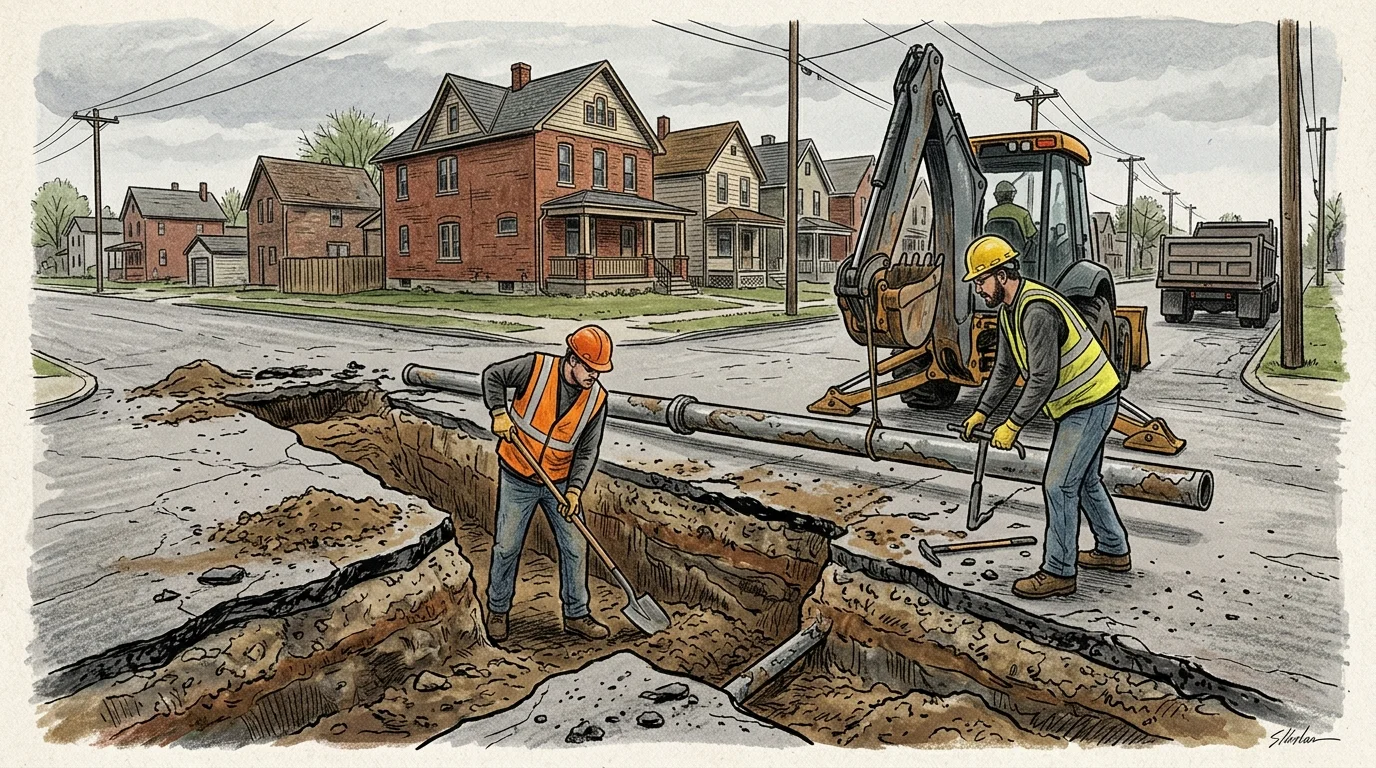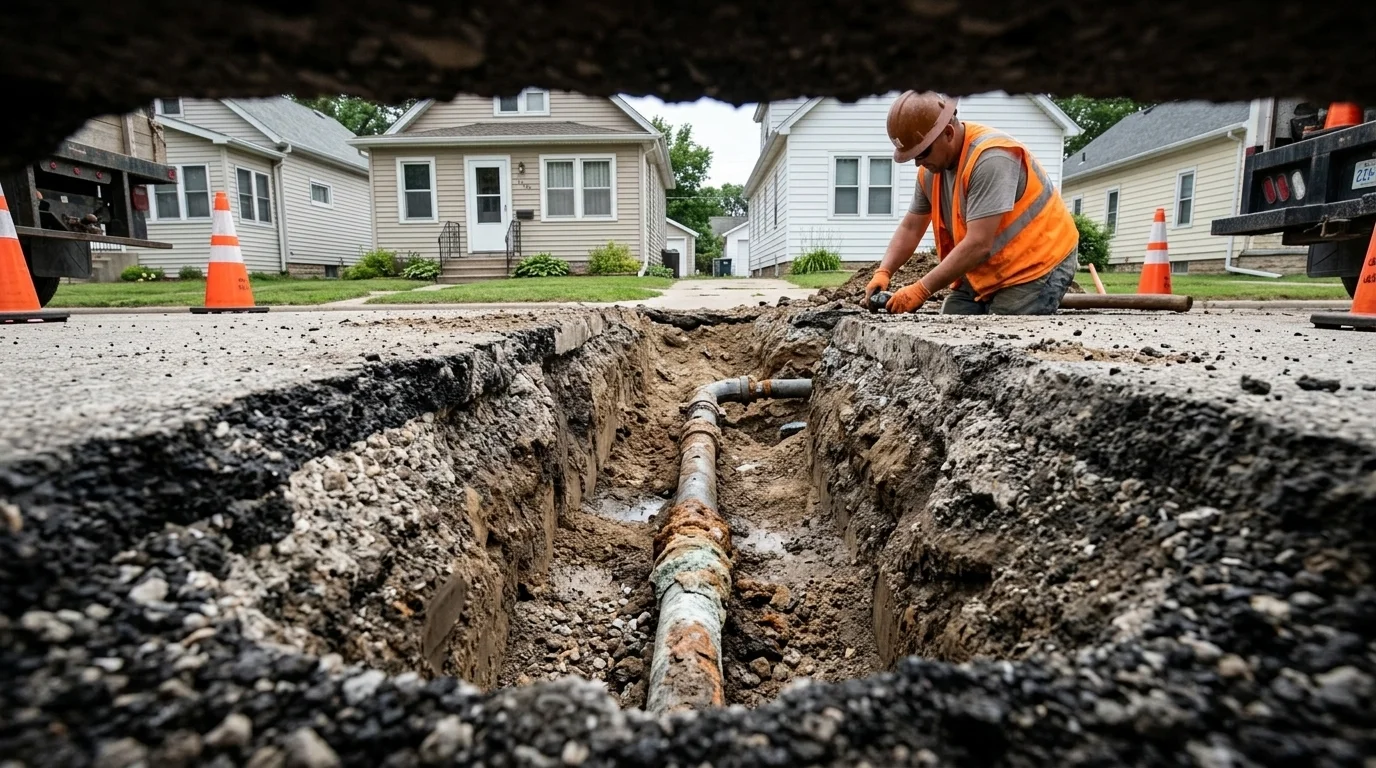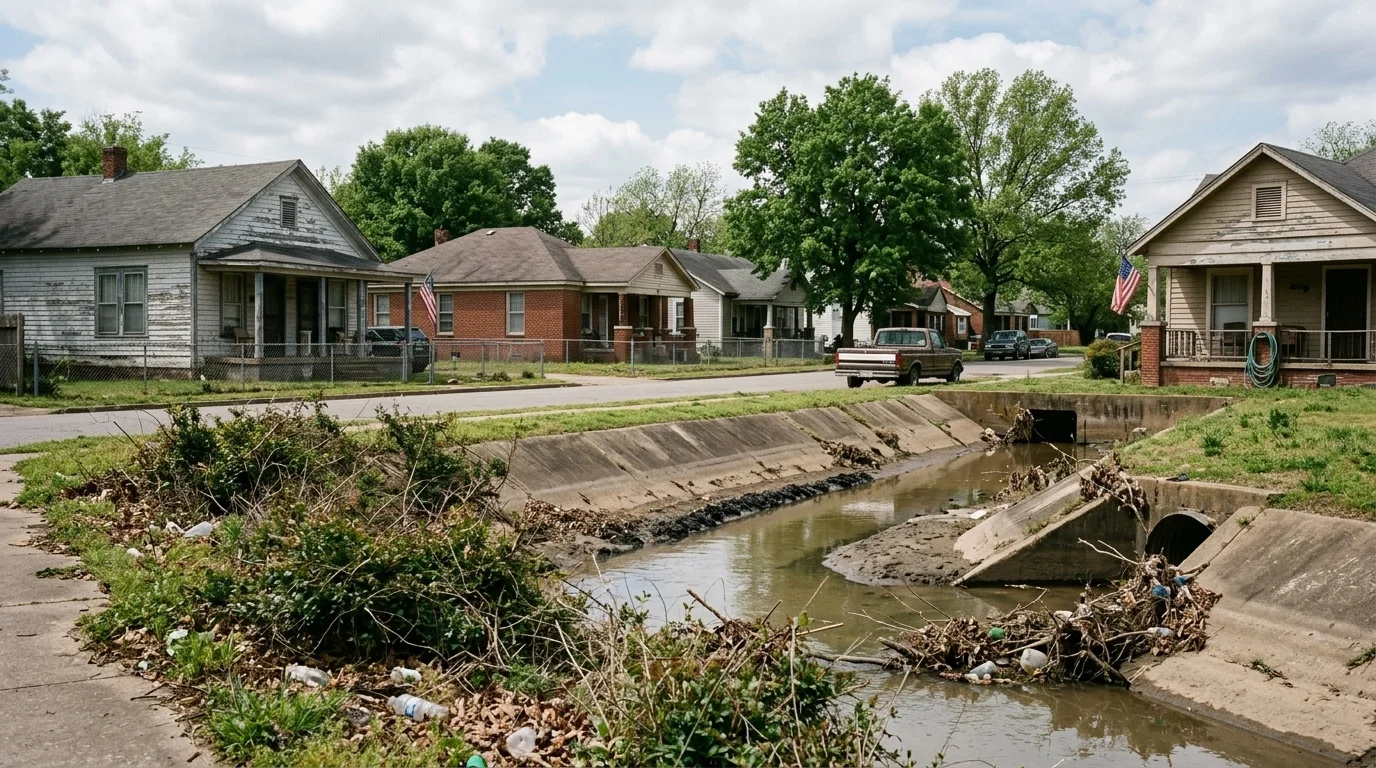
Fayetteville, Arkansas is moving forward with flood control construction in its West End neighborhood, an older area near downtown that has become increasingly vulnerable to stormwater flooding as one of the fastest-growing metros in the country paves over more and more land.
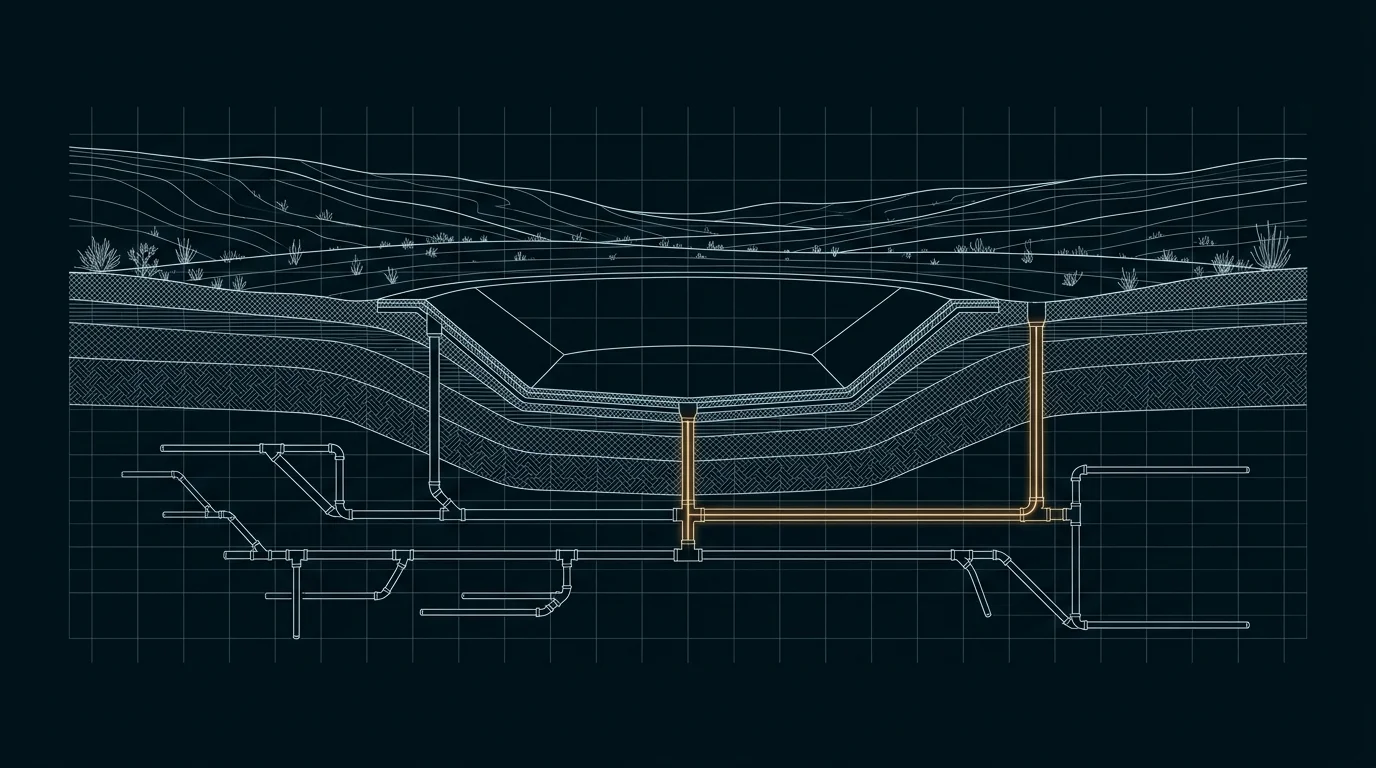
The project will add engineered floodplain storage along the Town Branch and Spout Spring Branch drainages, which feed into the West Fork of the White River. These systems work by holding stormwater during heavy rainfall and releasing it slowly, reducing the surge that overwhelms streets and homes downstream. The city has posted the construction opportunity on its bid portal, though the total project cost has not been publicly disclosed.
West End sits in one of Fayetteville's oldest and most flood-exposed corridors. It's a historically working-class area with a mix of older single-family homes built long before Northwest Arkansas became a national growth story. Since then, new rooftops, parking lots and roads across the region have dramatically increased stormwater runoff, pushing more water into drainage systems designed for a smaller, slower-growing city. Major flood events in 2019, 2022 and 2023 exposed those limits and accelerated the city's stormwater investment program.
Fayetteville has been working through a multi-year drainage capital plan for over a decade, shaped in part by a 2019 voter-approved bond package. The urgency has only grown. Arkansas is experiencing measurably more frequent extreme rainfall events, with the state seeing more 100-year and 500-year storms than historical averages would predict. Cities that invest in floodplain improvements can also earn credits under FEMA's Community Rating System, which translates directly into lower flood insurance premiums for residents.
With contractor selection underway, the timeline for construction has not yet been announced.