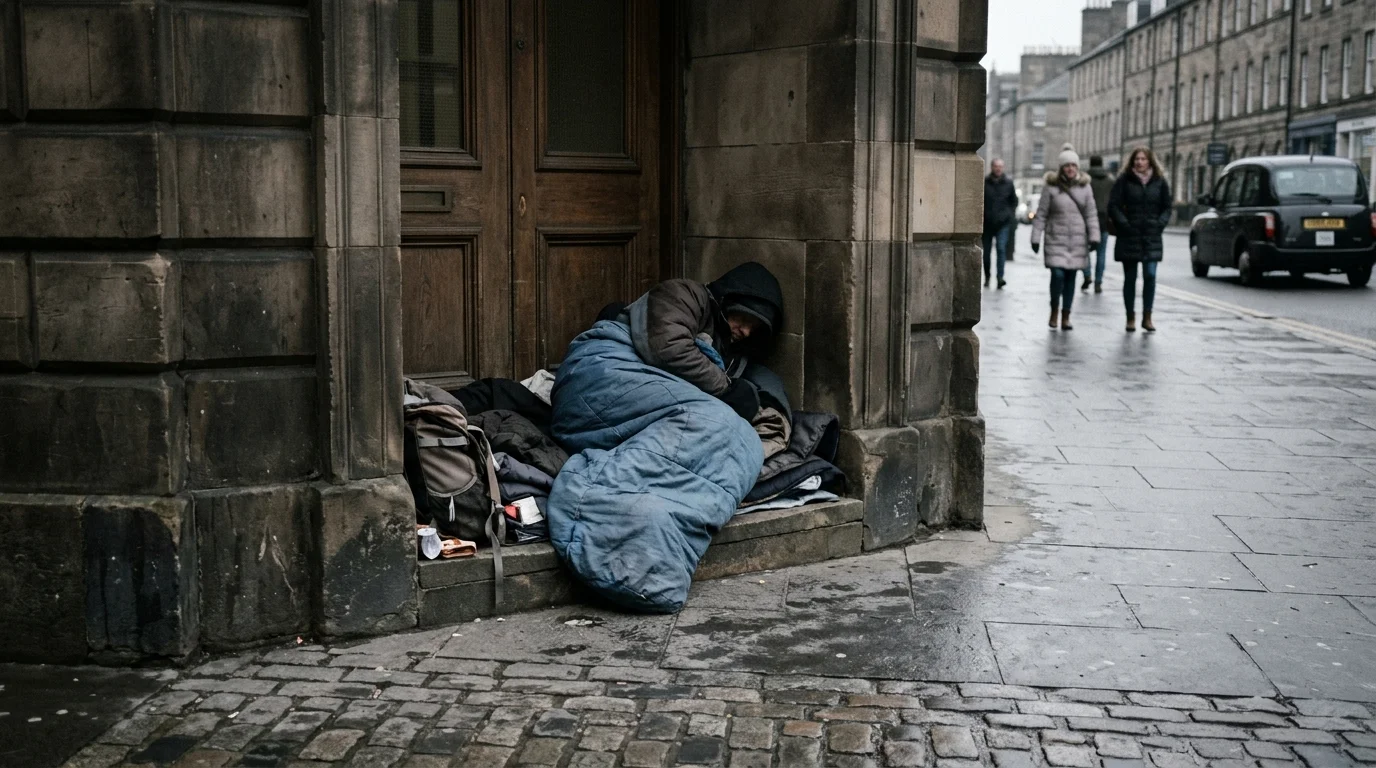
Edinburgh, Scotland's capital, is moving to open a dedicated Welcome Centre for people sleeping rough in the city, a year-round hub designed to reach those who keep falling outside the reach of an already-strained homelessness system.
The centre would offer a low-threshold drop-in service: food, warmth, showers, and on-site access to housing officers, health workers, benefits advisers, and addiction support, all under one roof. The model is a deliberate step away from emergency night shelters toward something more durable, and it targets the people hardest to serve: those with no recourse to public funds, EU nationals who lost rights post-Brexit, and people with complex mental health or addiction needs who have been offered statutory housing but cannot sustain it.
The city is contracting for the service through a tender posted on Public Contracts Scotland, the mandatory procurement portal for Scottish public bodies. The contract value is not listed publicly. Established Edinburgh charities including Bethany Christian Trust, Cyrenians, Simon Community Scotland and Streetwork have historically delivered services of this kind and are likely to compete.
Source: NationGraph.
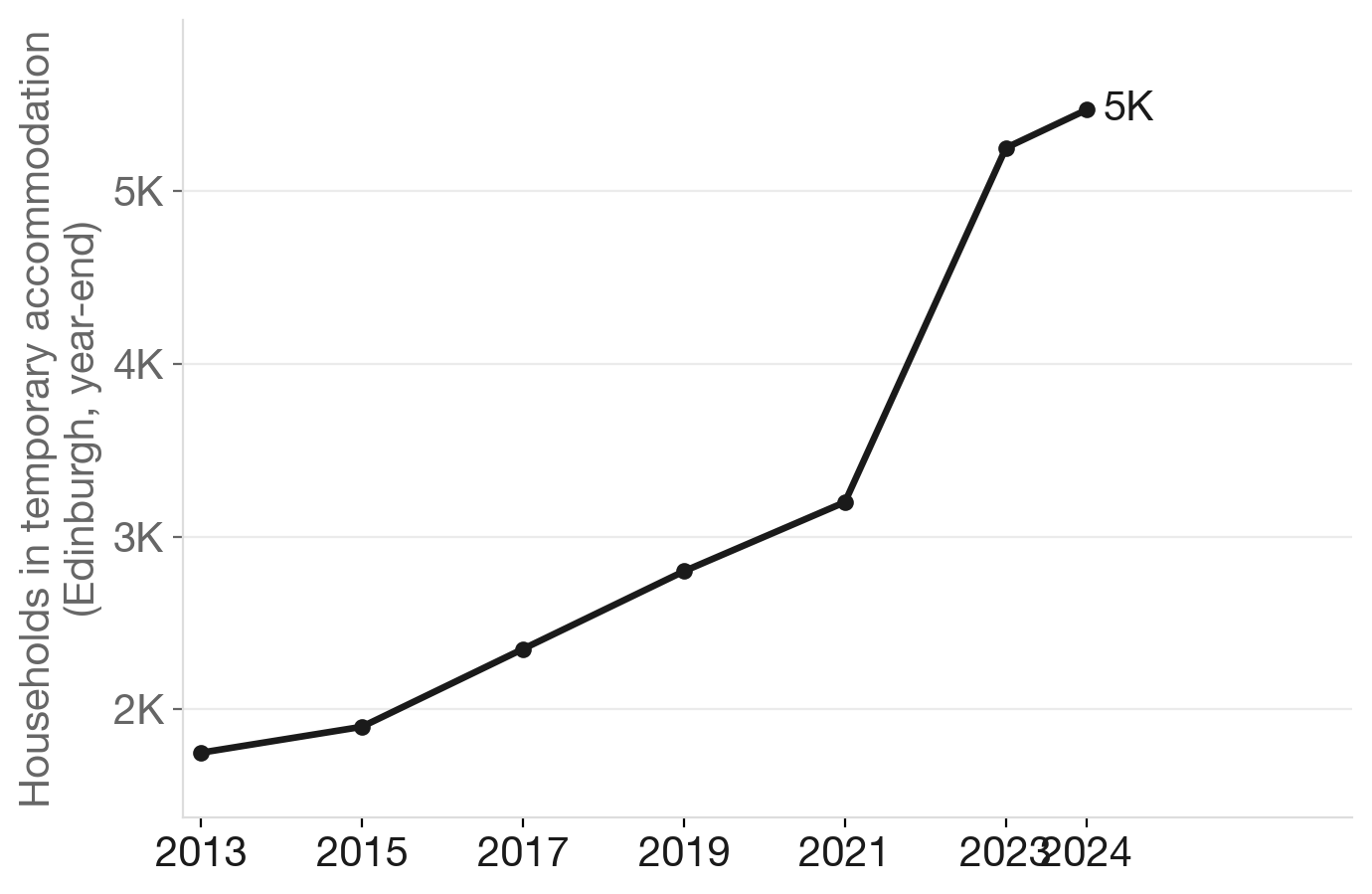
The timing reflects how far Edinburgh's housing situation has deteriorated. The City of Edinburgh Council declared a housing emergency in November 2023, one of the first UK local authorities to do so. Scotland's Parliament followed with a national declaration in May 2024. The council now spends more than £2 million a month on temporary accommodation, much of it in B&Bs and hotels that campaigners and council members alike have called unsuitable. Edinburgh has repeatedly breached the legal limits set by Scotland's Unsuitable Accommodation Order.
The pressure has been building for more than a decade. Scotland's homelessness law is among the strongest in Europe: since 2012, every unintentionally homeless household has a legal right to settled accommodation. But that entitlement has run into a city that has grown by roughly 12% since 2011, seen thousands of rental homes converted to short-term lets, and built far too little social housing to keep pace. The cost-of-living crisis, the end of pandemic eviction protections, and the arrival of Ukrainian and Afghan refugees added further strain after 2020.
Rough sleeping in Edinburgh remains smaller in scale than in major English cities, partly because Scotland's stronger statutory duties catch more people earlier. But it has grown visibly in the city centre, and the Welcome Centre model is a recognition that statutory duties alone are not reaching everyone.
The Scottish Government's Ending Homelessness Together strategy has endorsed this wraparound, by-and-for approach since 2018. Edinburgh's tender puts that policy into practice. Who wins the contract and when the centre opens have not yet been announced.