Colorado issued 22 wildfire-related procurement solicitations in October 2026, against a 12-month monthly average of 5.1, a 4.3x surge and the highest single-month volume in at least 15 months. The number itself is striking. The reason behind it is more so: $54.6 million in federal Community Wildfire Defense Grant funds has been sitting in Colorado for years, and only about $1.4 million of it had actually been disbursed as of this fall. The October RFP wave is the sound of 17 local governments simultaneously realizing the spending clock is running out.
The USDA's Community Wildfire Defense Grant program, authorized by the 2021 Bipartisan Infrastructure Law, seeded that $54.6 million across four active grants in Colorado, with performance periods running through 2029 and 2030. But federal grants don't spend themselves. Recipients have to develop scopes of work, run competitive procurements, and execute contracts, a process that takes months even when the urgency is obvious. It wasn't until this summer that urgency became impossible to ignore.
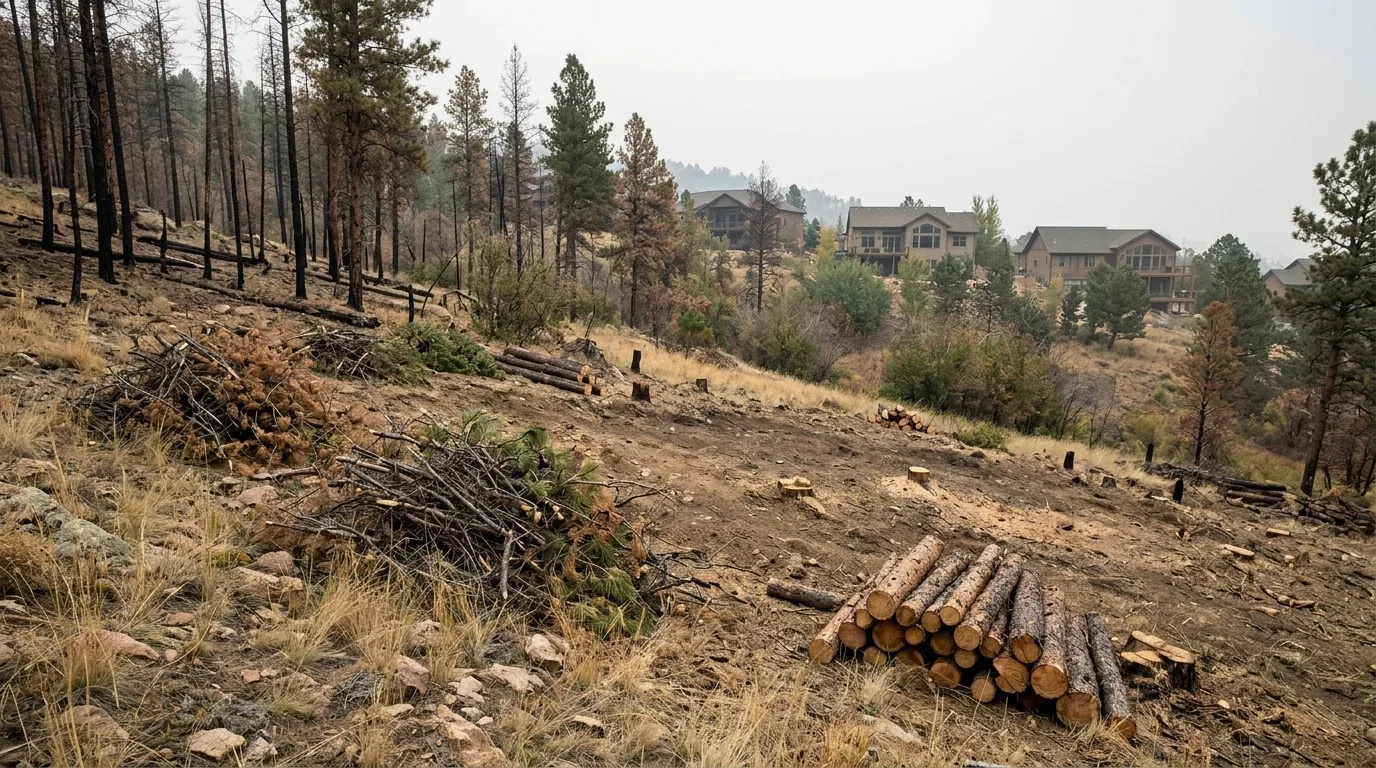
The Aspen Acres Fire ignited June 29, 2026, and burned 102,007 acres across Custer, Pueblo, and Huerfano counties before it was contained, destroying more than 850 structures including 319 homes. It is Colorado's eighth-largest fire by acreage and its second-most-destructive ever by structures lost, behind only the 2021 Marshall Fire. The 2026 fire season as a whole burned roughly 3.4 million acres statewide, 146 percent of the 10-year average. That backdrop transformed CWDG grant management from an administrative task into a political priority.
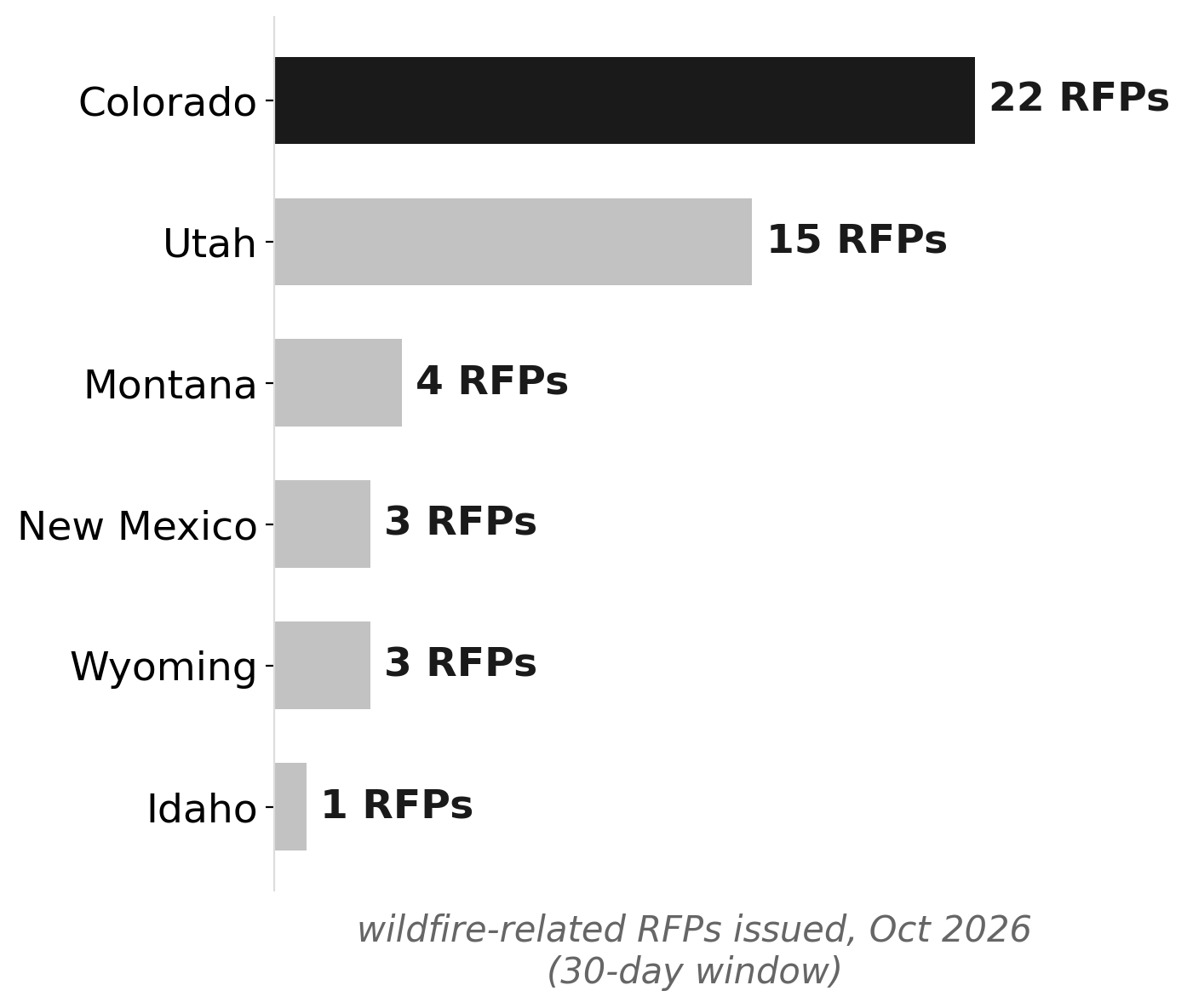
Source: NationGraph.
The 22 RFPs that followed cluster tightly around exactly what CWDG funds are designed to buy: Community Wildfire Protection Plan updates, Home Ignition Zone assessments, vegetative fuels reduction contracts, and watershed health evaluations. Larimer County and Boulder County each issued three solicitations. The Town of Superior, which lost more than a thousand homes in the 2021 Marshall Fire, issued two. All 17 participating jurisdictions are procuring the kind of pre-disaster planning and mitigation work that CWDG was built for, meaning this month's RFP surge is less a reaction to Aspen Acres than a belated execution of plans that were already funded.
Colorado's state forester Matt McCombs has publicly cited the CWDG program as the central federal tool for wildfire risk reduction, while flagging uncertainty about its long-term reauthorization. That uncertainty adds another layer of pressure to spend what's already been awarded. Nationally, the program has disbursed funds slowly across recipient states, a pattern Colorado is now working to reverse as grant windows narrow.
The federal disbursement gap isn't the only acceleration happening at once. On November 3, Colorado voters approved Proposition 137 with 51.7 percent, redirecting roughly $83 million per year in existing state sporting-goods sales tax revenue to the Colorado DNR and State Forest Service for wildfire mitigation and forest management. The measure doesn't raise taxes; it redirects revenue already being collected. But the fiscal effect is substantial: the state's existing wildfire budget runs about $16.4 million annually, and Proposition 137 nearly quintuples it.
These two funding streams are distinct and shouldn't be conflated. The CWDG money flows from USDA directly to local grantee jurisdictions, which then procure contractors, the mechanism driving today's RFP count. Proposition 137 flows to the Colorado DNR and State Forest Service at the agency level, funding programs and capacity rather than local contracts. The Prop 137 dollars won't reach local procurement pipelines immediately; that cascade will take another budget cycle or two to materialize. But the structural implication is durable: Colorado now has a permanent, annually replenishing state funding stream that will sustain a mitigation pipeline long after the CWDG grants close out.
The legislative picture at the federal level is less settled. Rep. Brittany Pettersen introduced a six-bill bipartisan package in July, including the Guaranteed Disaster Assistance Act, which would make Hazard Mitigation Grant Program funding automatically available after wildfires, removing the need for a presidential disaster declaration. That proposal is a direct response to the Trump administration's denial of FEMA declarations for two earlier Colorado fires. Colorado Senators Bennet and Hickenlooper introduced a companion Stafford Act amendment in April. Neither bill has cleared committee.
For residents in Colorado's wildland-urban interface communities, the practical near-term change is a significant uptick in contracted mitigation work: fuel breaks, defensible space assessments, home hardening evaluations, and updated evacuation planning. That work is now being procured by 17 governments in a single month. Whether that pace holds depends on how quickly contractors can be onboarded and whether CWDG program timelines stay intact in the next federal budget cycle.
The bigger open question is federal: if Congress doesn't reauthorize the CWDG program, the structural pipeline Proposition 137 is designed to sustain will have no federal counterpart once the current grants expire. Colorado's October RFP count shows what happens when urgency finally meets available funds. What it doesn't show yet is what the state does when those funds run dry.