Dozens of Alaska Native villages are losing ground to the sea and the thawing earth beneath them, and the federal government is directing $4 million toward helping tribes build infrastructure to survive it.
The Bureau of Indian Affairs awarded the funds on April 23 through its Tribal Climate Resilience program, which has supported Alaska Native communities since 2011. The BIA's Alaska Region serves 229 federally recognized tribes, more than any other state, and the vast majority face direct threats from flooding, erosion, or permafrost thaw.
Alaska has warmed roughly 4°F since the 1950s, with Arctic regions warming even faster. That heat is dissolving the frozen ground that holds up buildings, roads, water systems, and airstrips. Along the coast, reduced sea ice extends the erosion season, and some villages are losing feet to tens of feet of shoreline each year. The Government Accountability Office found as far back as 2003 that 184 of 213 Alaska Native villages were affected by flooding and erosion. By 2009, it identified at least 31 facing threats severe enough to require partial or complete relocation.
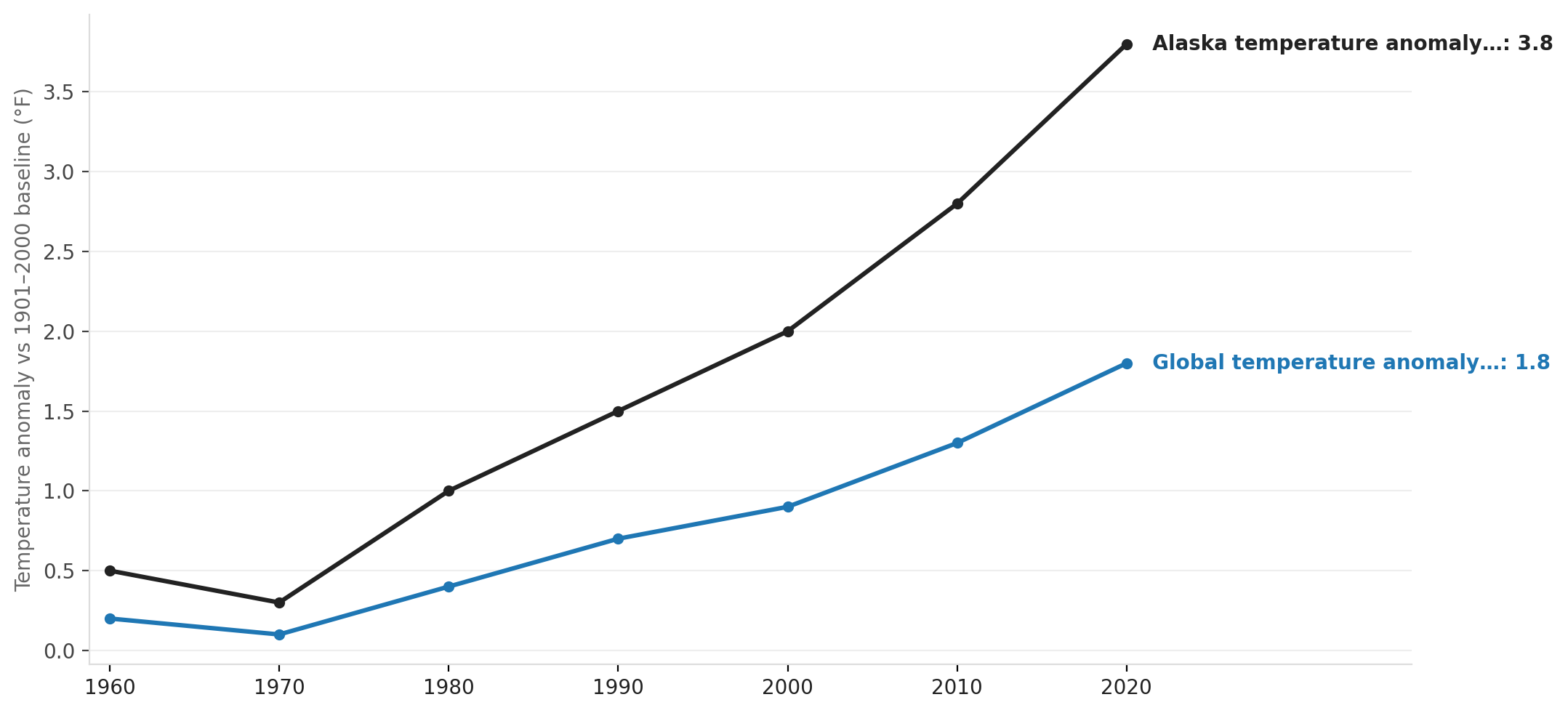
Source: NationGraph.
Two decades later, many of those same communities are still waiting for comprehensive solutions. The village of Shishmaref voted to relocate in 2016 but has yet to secure full funding. Newtok, one of the most visible symbols of climate displacement, only began moving families to a new site called Mertarvik around 2019 after nearly two decades of bureaucratic delays. Relocation costs run into the hundreds of millions per village, and construction in remote Alaska, accessible only by plane or boat, costs three to ten times more than comparable work in the Lower 48.
The Biden administration's Bipartisan Infrastructure Law created the first dedicated federal funding stream for voluntary community-driven relocation and boosted tribal climate spending significantly. Whether that pipeline continues is an open question. The current Trump administration has proposed cuts to Interior Department programs and has restructured or eliminated climate-focused offices across the federal government. This April 2026 award may reflect funding locked in through prior congressional appropriations, or it may reflect the bipartisan reality that Alaska's congressional delegation has long supported tribal infrastructure spending on public safety grounds regardless of broader climate politics.
The specific villages and projects this grant will fund have not been publicly detailed. What happens next for the communities waiting on relocation funding depends heavily on whether Congress preserves or cuts the programs that have, for many villages, become the only financial lifeline available.