Hawaii is launching a four-year program to train a new generation of poultry farmers, hoping to chip away at the state's dangerous reliance on food shipped from 2,400 miles away.
The University of Hawaii will use a $600,000 federal grant to train 32 undergraduate students in small-scale poultry production tailored to Hawaii's unique conditions. The program addresses a dual crisis: more than 85% of Hawaii's food is imported, and less than 5% of the poultry consumed locally is raised in the state. The farmer population is aging, with few young people entering agriculture.
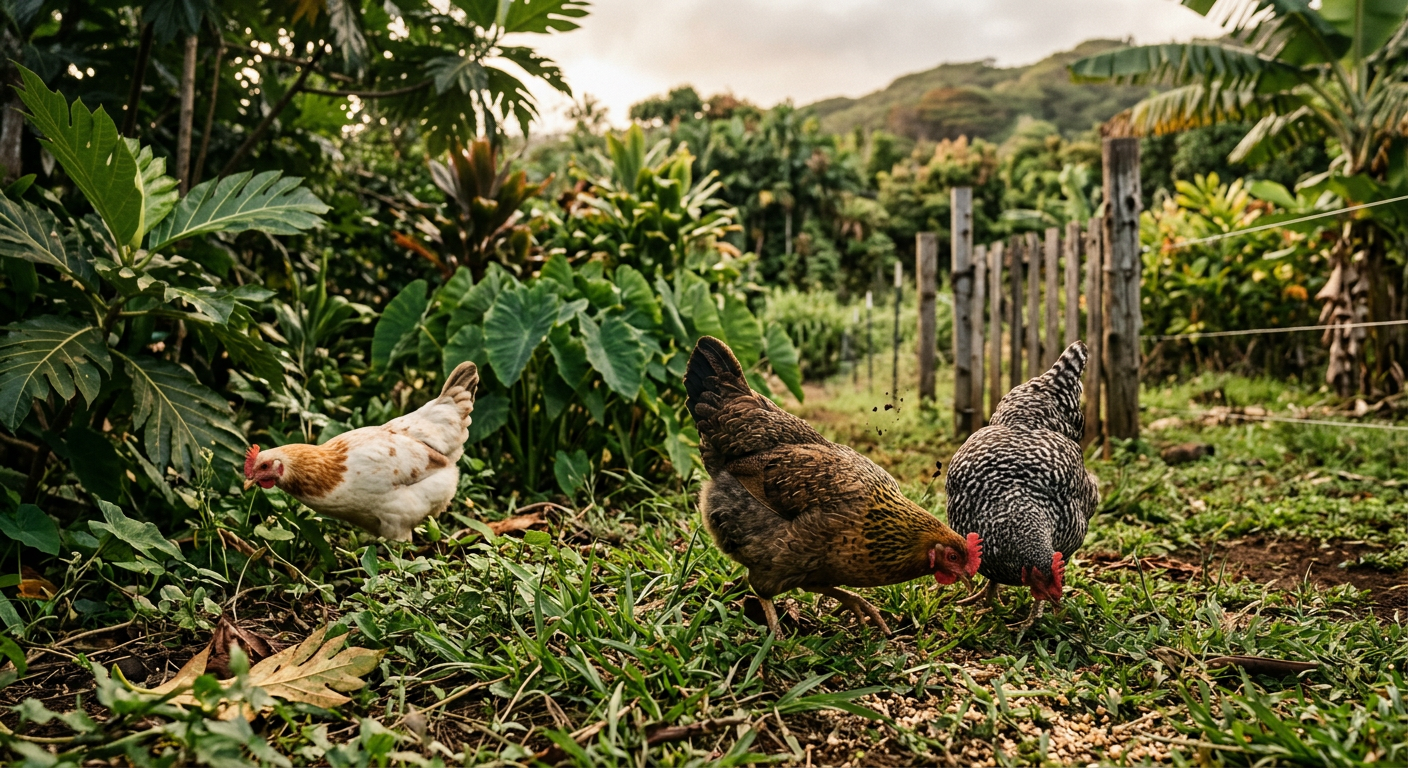
Unlike mainland poultry operations, Hawaii's remoteness and limited farmland make conventional production unviable. Feed costs alone account for 70% of production expenses, and most ingredients must be imported. The new curriculum will focus on backyard and pasture-raised systems common in Hawaii, emphasizing locally available agricultural by-products as feed alternatives to reduce dependence on imports.
Hawaii's extreme isolation makes it uniquely vulnerable to supply disruptions. During the COVID-19 pandemic and recent shipping delays, empty grocery shelves became routine. The state has only a five-to-seven-day food supply on hand at any time.
The program will train eight students per year, starting in 2026, through classroom instruction and hands-on farm experience. Course materials will be made publicly available online for farmers and community members.
Hawaii's broiler chicken industry largely collapsed in the 1990s when large-scale operations couldn't compete with cheap imported poultry. This program represents an attempt to rebuild local production using a model that fits the state's constraints: small farms, local inputs, and methods suited to island agriculture.
The state has set a goal of producing 30% of its food locally by 2030, though progress has been slow.