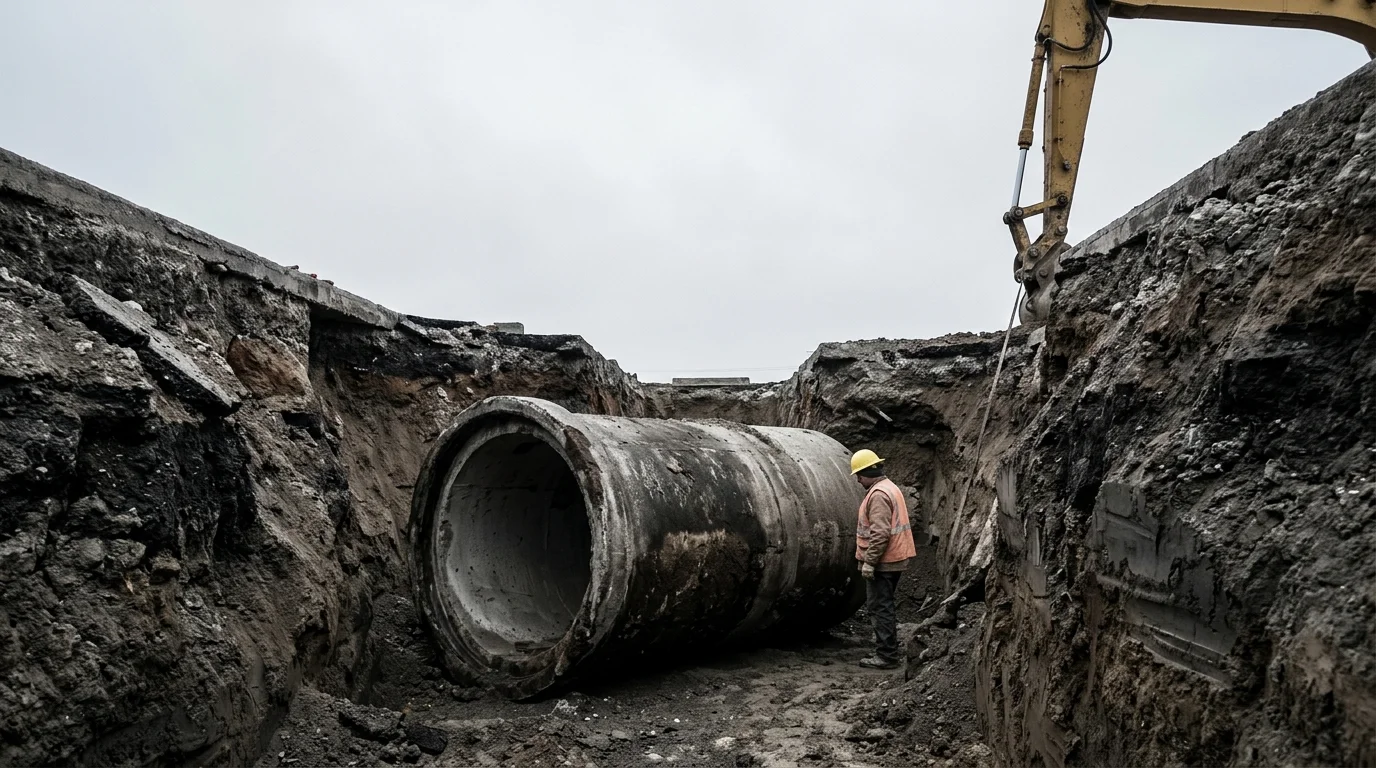
Bozeman, Montana is replacing the backbone of its wastewater system near Montana State University, launching the first phase of what city officials expect to be a multi-year overhaul of sewer infrastructure that was built when the city was a fraction of its current size.
The project targets sewer interceptors, the large trunk lines that carry wastewater from neighborhood pipes to the treatment plant. These are among the most critical, and most expensive, pieces of a city's underground system. When they crack, become infiltrated by groundwater, or simply can't move enough volume, the consequences can include raw sewage reaching waterways, backups into homes, and federal enforcement actions. Bozeman's interceptors were largely built for a population that has since roughly doubled, from around 27,000 in 2000 to more than 56,000 today, with Gallatin County consistently ranking among the fastest-growing counties in the nation.
The segment being replaced runs through the MSU corridor, where the university's 16,000 students, dormitories, dining halls, and labs generate substantial wastewater loads. Construction near campus will bring disruption to surrounding neighborhoods and streets, though a detailed timeline hasn't been made public.
The city labeled this effort Phase 1, a signal that the full scope of deterioration or capacity shortfall is too large to tackle at once. Bozeman completed a major upgrade of its Water Reclamation Facility about a decade ago to meet strict state nutrient discharge limits into the East Gallatin River. Replacing the conveyance lines feeding that plant is the logical next step: even a well-functioning treatment facility can be overwhelmed if the pipes leading to it are failing or undersized.
The project fits a national pattern. The American Society of Civil Engineers has consistently graded U.S. wastewater infrastructure at D+, and the EPA estimates the country needs $271 billion in wastewater investment over the next two decades. Montana has been drawing on Clean Water State Revolving Fund dollars that flow from the 2021 Bipartisan Infrastructure Law, and Bozeman has historically been an active applicant for that program.
The underlying financial question, one that has generated real debate at Bozeman City Hall in recent years, is who bears the cost. Rate increases to fund capital improvements have drawn public pushback, while advocates for slower growth argue that new development has not fully paid for the infrastructure it requires. That tension is unlikely to ease as construction bids are reviewed and project costs become public.
The city has posted the bid for contractor selection, with the solicitation dated June 10, 2026. Montana's short construction season, roughly May through October, means work will need to move quickly to make meaningful progress before winter.