Subscribe to NationGraph News
X
Oops! Something went wrong while submitting the form.
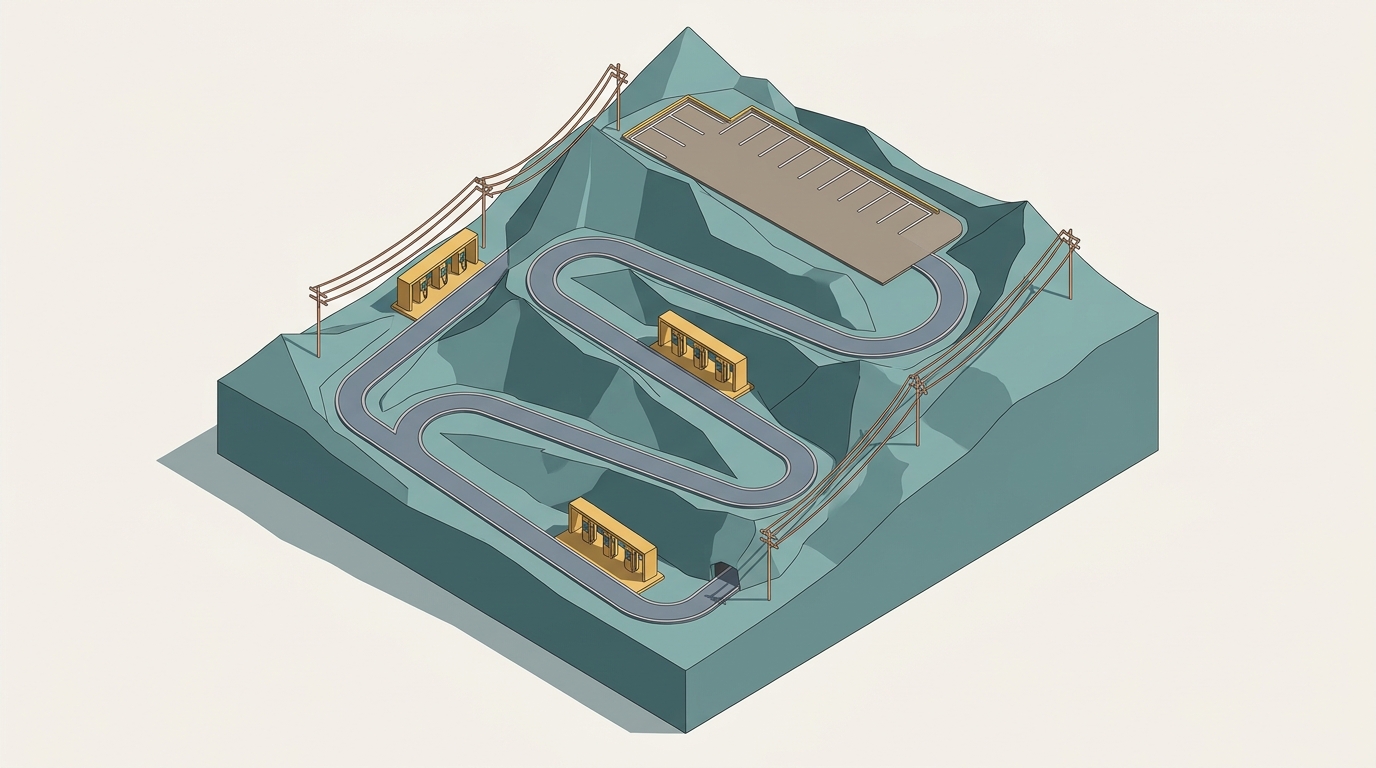
Himachal Pradesh is moving to build the charging backbone that its incoming electric bus fleet will depend on, soliciting contractors to construct depot facilities and electrical charging infrastructure at locations across the mountainous north Indian state.
The effort confronts a problem that has stalled e-bus programs elsewhere in India: buses can be ordered and delivered, but without chargers in place, they don't run. Several Indian states saw their electric bus deployments sit idle for months in 2023 and 2024 as charging infrastructure lagged behind procurement. Himachal Pradesh is attempting to get ahead of that bottleneck by building the civil and electrical groundwork first, through a tender posted on the state's procurement portal on April 27, 2026.
The challenge in Himachal Pradesh is steeper than in most Indian states, in the literal sense. HRTC buses climb roads that gain thousands of meters in elevation, from the foothills to routes serving Manali, Dharamshala, and the Spiti Valley. Electric buses burn through battery charge far faster on those gradients than on flat urban roads, and sub-zero winters that grip much of the state further degrade battery performance. That means chargers need to be more powerful, more strategically placed, and built to function in conditions that would be unusual anywhere else in India.
The state's power grid offers one genuine advantage: Himachal Pradesh runs largely on hydroelectric generation, meaning electric buses here would draw from some of India's cleanest electricity. But distributing that power reliably across hilly terrain to remote depot locations is its own engineering problem.
The infrastructure push is tied to national commitments. India's PM e-Bus Sewa scheme, launched in 2023, allocated roughly ₹57,600 crore to put 10,000 electric buses into service across the country. Himachal Pradesh Transport Corporation signed on to receive buses under that program and its predecessors, including the central government's FAME-II scheme. Central funding is effectively a requirement for a state carrying a debt load that exceeds 40 percent of its gross state domestic product, leaving little room for large capital outlays on its own.
Specific figures — the number of charging stations, exact locations, and total project cost — are contained in the full tender document and were not available at publication. What is clear is that the scope covers the entire state and bundles civil construction with electrical installation, suggesting the government wants a single integrated buildout rather than a patchwork approach.
The contract award will set the timeline for when charging stations are ready and, in turn, when electric buses can realistically begin regular service on HP's mountain routes.