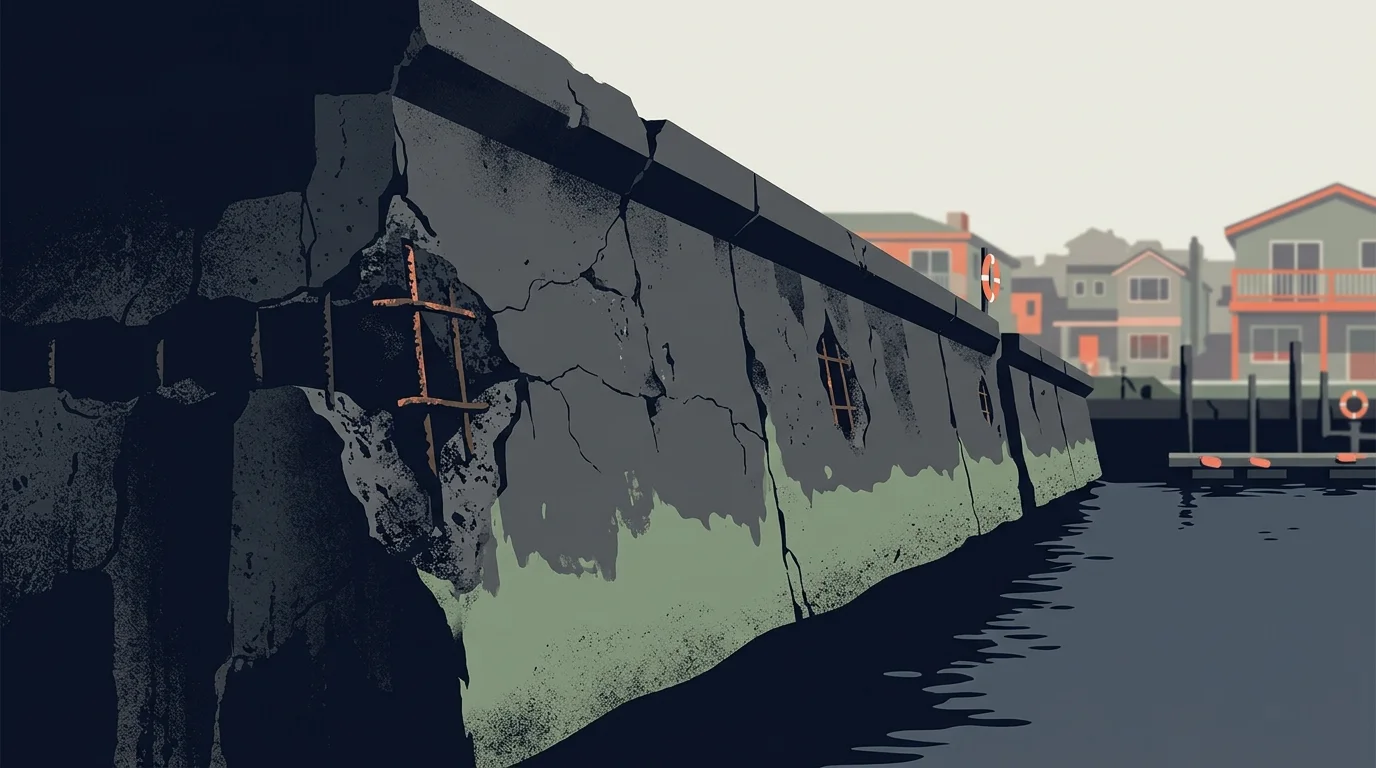
Salem, Massachusetts is moving to reconstruct a deteriorating seawall along Columbus Avenue, a stretch of waterfront near Salem Harbor where aging infrastructure and rising seas are putting homes, businesses, and residents at growing risk.
The city is seeking contractors for the project, posted to its bid portal this week. The full budget and construction timeline have not been made public yet, but the work would replace seawall infrastructure that, like most of Salem's coastal defenses, was likely built in the mid-20th century and designed for a climate that has since shifted considerably.
The stakes are not abstract. Boston's tide gauge has recorded roughly 11 inches of sea level rise since 1920, and state models project another 1.5 to 2.5 feet by 2050. What were once rare flood events are now showing up with alarming regularity: high-tide flooding days in the Boston Harbor area have more than tripled since 2000. Salem sits on a low-lying peninsula with about five miles of coastline, making it one of the North Shore's most exposed communities. The January 2018 bomb cyclone flooded downtown and waterfront neighborhoods, accelerating urgency around coastal infrastructure that had been eroding for years.
Columbus Avenue runs through a particularly vulnerable section of the city near Collins Cove, a mix of dense residential blocks, maritime uses, and tourism infrastructure. Many of the residents most at risk are lower-income, and Salem's updated FEMA flood maps have expanded the zones considered at high risk, driving up insurance costs in neighborhoods that can least afford it.
Salem isn't alone in this scramble. Scituate, Revere, Hull, Gloucester, and Newburyport have all undertaken similar seawall projects in recent years as Massachusetts communities race to replace coastal defenses designed for an earlier era. The state's Municipal Vulnerability Preparedness program and federal infrastructure funding have helped foot the bills, which matter enormously for a smaller city like Salem with a constrained tax base.
Once a contractor is selected and full project details are finalized, residents along the waterfront will have a clearer picture of the construction schedule and what the rebuilt wall is designed to withstand.