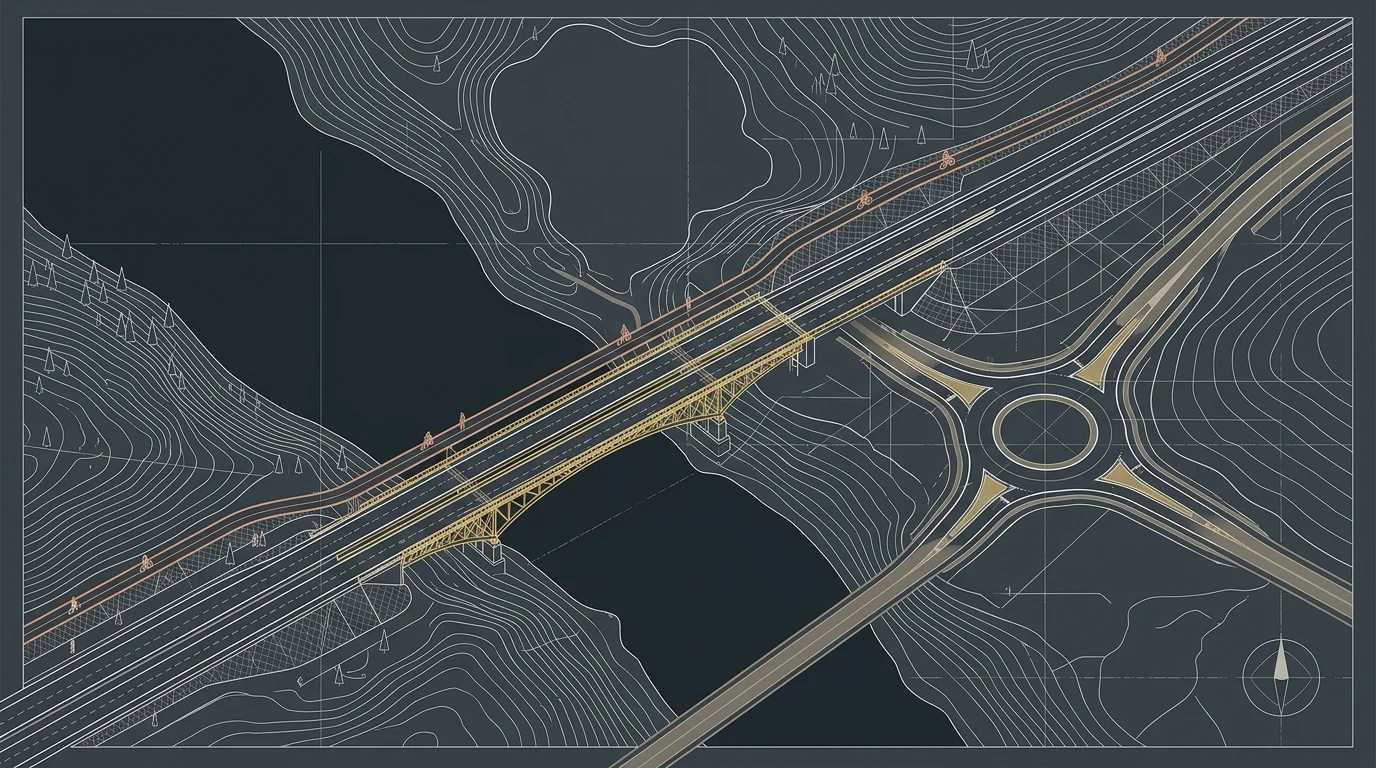
A stretch of Highway 210 in central Minnesota's Cuyuna Range is getting a significant overhaul, with $3.2 million in federal funding covering new bridges, roundabouts, pedestrian infrastructure, and modern safety upgrades.
The project replaces two existing bridges with a single new structure, while also rebuilding the surrounding corridor with ADA-compliant improvements, updated signals and lighting, and a pedestrian and bicycle trail. The Cuyuna Lakes area, once defined by iron mining, has reinvented itself as a major recreational destination built around mountain biking and outdoor tourism, making multimodal infrastructure investments especially relevant there.
The federal grant of $3,206,221.65 comes from the Bridge Formula Program, part of the Bipartisan Infrastructure Law signed in 2021. That program represents the largest dedicated federal bridge investment since the interstate highway system was built, committing $26.5 billion over five years to repair and replace aging spans nationwide. Minnesota is receiving roughly $302 million through the program over that period.
Bridge investment carries particular weight in Minnesota. The 2007 collapse of the I-35W bridge in Minneapolis, which killed 13 people and injured 145, forced a reckoning with the state's aging infrastructure and accelerated its inspection and replacement programs. Nationally, more than 45,000 bridges were classified as structurally deficient as of 2021, a backlog rooted in the simultaneous aging of thousands of structures built during the mid-20th century highway boom.
The Highway 210 corridor links communities including Brainerd, Crosby, and Aitkin across central Minnesota. Minnesota has been among the more aggressive states in deploying Bridge Formula Program dollars, and MnDOT's approach of bundling bridge replacements with roundabouts, trails, and accessibility upgrades has become standard practice on federally funded projects, though the model occasionally draws skepticism in rural areas where residents question the need for bike and pedestrian amenities.
Similar federal investments have been reaching smaller communities across the country, from Pawnee, Oklahoma to Franklin County, Pennsylvania. The grant was posted October 20, 2025, indicating the project is moving into its active phase, though MnDOT has not announced a construction timeline publicly.