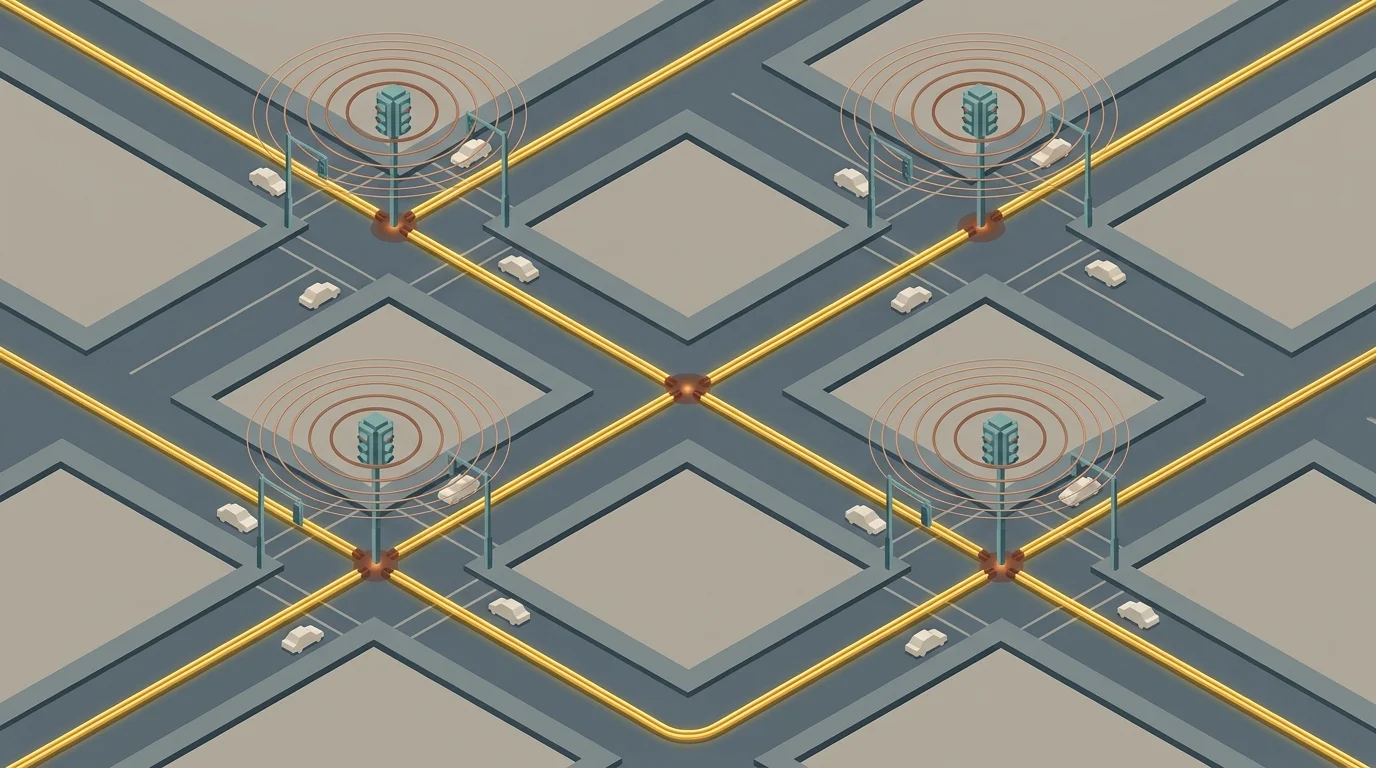
Cameron County, Texas is wiring its busiest roads with fiber-optic cable and private 5G antennas in a bid to bring its traffic signal network into the modern era, backed by an $8.3 million federal grant from the Surface Transportation Block Grant Program.
The project will connect 80 intersections across the county, including stretches of Alta Mesa Boulevard, Paredes Line Road, and FM 802, corridors that carry heavy daily traffic through the rapidly developing areas west and north of Brownsville. Instead of relying on commercial cellular carriers, the county is building a dedicated Private 5G network, meaning the county itself will control its own communications backbone for real-time signal coordination, emergency vehicle response, and eventually vehicle-to-infrastructure communication as connected cars become more common.
The upgrade is long overdue. Cameron County, home to roughly 425,000 residents in Texas's southernmost tip, has watched its population and commercial activity surge over the past two decades, driven by cross-border trade through the Port of Brownsville, the SpaceX Starbase facility in Boca Chica, and steady residential growth. The arterial roads targeted by this project were largely designed for a much smaller, more rural county. Many of its signals still rely on older, disconnected hardware that cannot adapt to shifting traffic conditions in real time.
Federal dollars are essential here. Cameron County's median household income sits around $38,000, well below the national average, and local tax revenue alone cannot fund infrastructure upgrades at this scale. The Surface Transportation Block Grant Program, reauthorized through the 2021 Bipartisan Infrastructure Law, is specifically designed to give counties and cities flexibility to invest in exactly this kind of modernization.
At 80 intersections, the scope is large enough that the project will reach virtually every driver in the county. The Brownsville Metropolitan Planning Organization had identified signal coordination and smart-infrastructure investment as priorities for managing congestion without the cost and disruption of widening roads.
Construction is expected to proceed under TxDOT's Pharr District, which oversees transportation projects in the Rio Grande Valley. No timeline for completion has been publicly announced.