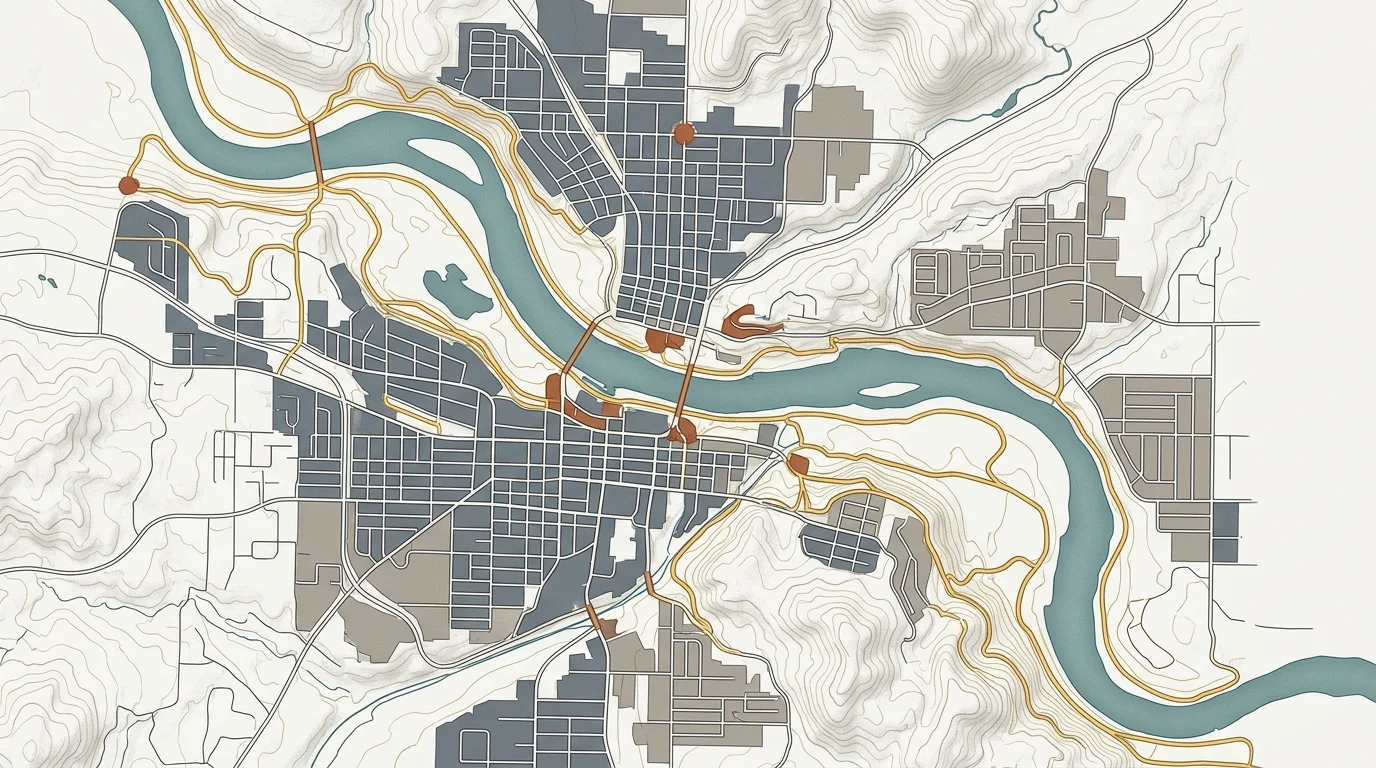
Little Rock, Arkansas is receiving $366,560 in federal funding to make improvements to the Arkansas River Trail, the 88-mile loop trail system that winds along the Arkansas River through Little Rock, North Little Rock, and surrounding Pulaski County.
The grant, awarded through the U.S. Department of Transportation's Surface Transportation Block Grant Program, reflects the kind of incremental federal investment that has shaped the trail over more than two decades. What started as scattered riverfront paths has grown, bridge by bridge and segment by segment, into one of the most celebrated urban trail systems in the South. Rails-to-Trails Conservancy and similar organizations have repeatedly recognized it as a standout. The Big Dam Bridge, completed in 2006, and the Two Rivers Bridge, which opened in 2011, were the signature milestones that knitted the system together and put it on the national map.
City officials have long positioned the trail as a key quality-of-life asset in a region competing with fast-growing suburban communities like Conway and the Benton County corridor for young professionals and families. Trail and greenway investments have generally drawn bipartisan support at the local level even as Arkansas remains a deeply conservative state.
The specific improvements this funding will cover are not detailed in the public record, which describes the project scope only in general terms. That vagueness leaves open questions about whether the work addresses the trail's most pressing needs, including segments damaged by the historic 2019 Arkansas River flooding or remaining gaps in the loop that limit connectivity.
The Surface Transportation Block Grant Program, reauthorized under the 2021 Bipartisan Infrastructure Law with $72.4 billion allocated through FY2026, is flexible enough to cover pedestrian and bicycle infrastructure alongside traditional road and bridge projects, making it a common funding vehicle for trail systems like this one. The city would typically contribute a local match of roughly $73,000 to $92,000 alongside the federal share.
Similar federal investments have supported riverfront trail projects around the country, including a trail linking two Connecticut mill towns along the Quinebaug River. In Little Rock's case, residents and trail users will be watching to see which section of the system gets the attention this round.